Big Ol’ Voter Guide for California – November 2014

This ballot is a long one, but I have great news. You’ve already voted for a lot of these same people once this year (WHAA? Yes). Let’s review, shall we?

California has adopted the “top two” open primary system of electing our state officers and legislators, which means that: (1) in the June election, voters chose among candidates of all parties, not just the party they are registered in; and (2) the top two candidates, regardless of party, advanced to the general election in November. So if you’re like me, you’re voting in November for all the same people you voted for in June in the State Assembly and statewide officer races. (Surprise! They are all Democrats.) You can find them all in my June voter guide. But not to worry, I’ve included my explanations here too.

There is also some REALLLLLY interesting and important stuff in the propositions. So pay attention.

This is my guide for the statewide candidates and ballot measures in the November 2014 election. The guide specific to San Francisco is posted here.

Without further ado, I submit to you my Big Ol’ Voter Guide. This time, I put my recommendations in order of how each race or measure appears on the ballot. In the interest of full disclosure, I’m a progressive attorney with a background in real estate and land use, whose passions include protecting and promoting San Francisco’s nightlife and culture, getting more women elected to public office, and bringing more public art to cities around the world. I’m a Vice Chair of the San Francisco Democratic Party, and I also like long walks on the beach.

Click here for more information on your voter registration and what your ballot looks like.

California Statewide Offices

Jerry Brown for Governor
Gavin Newsom for Lieutenant Governor
Alex Padilla for Secretary of State
Betty Yee for Controller
John Chiang for Treasurer
Kamala Harris for Attorney General
Dave Jones for Insurance Commissioner
Fiona Ma for Board of Equalization, District 2

Judiciary
Approve all of the Supreme Court Justices and Justices of the Court of Appeal

Superintendent of Public Instruction
Tom Torlakson

State Measures
Yes on Prop 1, Water Bonds
Yes on Prop 2, Rainy Day Fund
Yes on Prop 45, Health Insurance Rate Regulation
NO NO NO on Prop 46, Random Drug Testing of All Doctors, Increasing Malpractice Damages Cap
YES YES YES on Prop 47, Misdemeanor Offense Classification
Yes on Prop 48, Off-Reservation Indian Gaming Compacts

CALIFORNIA STATEWIDE OFFICES

Linda Ronstadt’s ex-boyfriend

Governor: Jerry Brown

Remember when Jerry Brown ran for Governor four years ago, when the economy was in the tank and nobody else wanted the job? Think about how far we’ve come. Governor Brown can’t take ALL the credit for the vastly improved economy, but he can take credit for having turned around some of the state’s structural budget deficits. Today he has a 60% approval rating, and during his term, California went from a $25 billion budget deficit to a $4.2 billion projected budget surplus, in no small part due to the tax measure that Brown pushed for in 2012.

His opponent Neel Kashkari is a Republican former banker with marginal support. He is running a very strange campaign, in that he’s trying to win over voters who oppose Brown from both the left AND the right. He is arguing that Brown hasn’t done enough for the poor, for schools, or for jobs. But these arguments ring hollow to me, given the numbers I cited above. Brown is doing a fine job, let’s keep him.

Lieutenant Governor: Gavin Newsom

Newsom’s hair looks exactly the same in every single picture taken of him ever.

I kind of feel bad for Gavin Newsom. The Lieutenant Governor doesn’t have much to do other than fill in when the Governor is absent or incapacitated. He sits on the State Lands Commission and the UC Board of Regents, and these can be powerful places to be – but very boring places for someone like Newsom, who likes to be the star of the show. But Newsom has been able to use his office to draw attention to important issues like drug policy reform. He has called for ending the war on drugs, calling it “nothing more than a war on communities of color and on the poor.” (Tell it, brother!). I’m happy to support him again.

His opponent is political consultant (and former chair of the California Republican Party) Ron Nehring from San Diego. Field Polls have Newsom ahead by a landslide, and Newsom has ten times the amount of money in the bank, so this campaign is all but over. I was listening to Nehring on KQED radio the other day, and his campaign motto seems to be, glumly, “Everyone deserves to have an opponent.” Aw. Sad.

Secretary of State: Alex Padilla
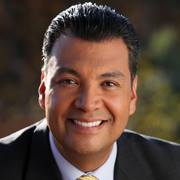
padilla

You wouldn’t guess this charming fellow is an MIT-trained nerd.

Senator Alex Padilla is a Democrat. His opponent Pete Peterson is a Republican. Is that enough for me? Yeah probably. But in case you’re interested, here’s more detail.

Peterson, an academic at Pepperdine University, has some interesting ideas. He has suggested that politicians’ salaries be based on the number of campaign promises they are able to keep. (Ha! Yeah. Right.) He has proposed a ban on all fundraising activities by state legislators and statewide officeholders while the legislature in is session, thus leveling the playing field for candidates who are running against incumbents. Hmm. I kind of like that idea, actually.

But I like Padilla because he has been a prolific (and liberal) legislator in the State Senate, authoring bills on a wide range of issues including local prosecution of military sexual assault, criminalizing the mislabeling of seafood, and improving campaign communication disclosures. Remarkably, he is also an MIT-trained engineer who is both charismatic and charming (!). If elected, he promises to modernize the technology used by the Secretary of State’s office (‘bout time!) to make it easier to open a business and to register to vote. Given his background, he is just the guy to tackle this pressing matter.

Controller: Betty Yee
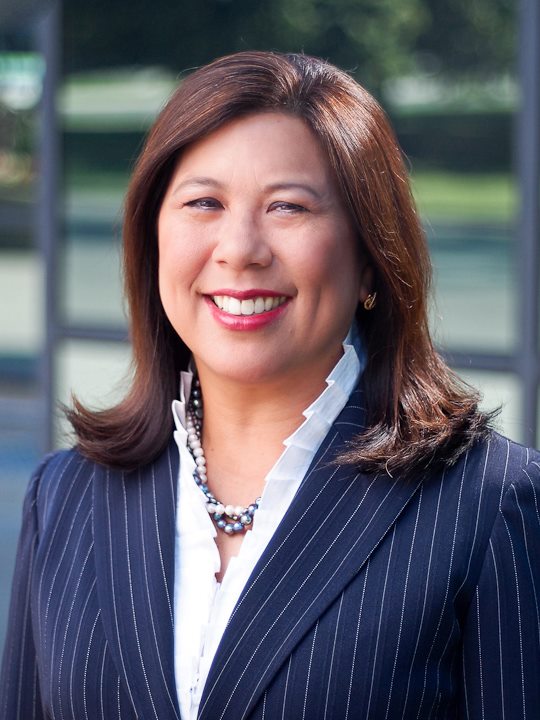
319850_4242416383172_1371294887_n

Betty Yee speaks for me

I can’t say enough good things about Betty Yee…she is genuine and smart, tough and effective, and she has far more  financial experience than her opponent. She is a lifelong public servant, having worked in financial-related offices in state government before running for the Board of Equalization, on which she now serves. On the BoE, she has used her position to fight for tax equity for same-sex couples, she has advocated for the legalization of recreational marijuana (think of the tax revenues!), and she has adhered to the highest of ethical standards (for example, she rejected campaign contributions form the tobacco industry). The Controller’s primary responsibility is to track and control the disbursement of the state of California’s money, and so having an unimpeachable ethical record is important.

Her opponent Republican Ashley Swearingen is the mayor of Fresno, and is widely considered to be a rising star in her party. Her only relevant experience is turning Fresno’s financial ship around, and she did so by cutting city jobs and forcing public employees to pay more of their pension contributions. (If you know me, you know these things make me wince). Fresno is not California, and I don’t think she’s ready for prime time.

Treasurer: John Chiang

Mathlete John Chiang

The Treasurer is the state’s banker, the officer who is responsible for managing the state’s investments, including state employee pension funds. Who better to serve as our next Treasurer than the person who has done a great job as the state’s Controller for the last 8 years? As Controller, he made a name for himself by enforcing a constitutional requirement holding that legislators would not be paid if they failed to pass a balanced budget by June 15, 2011. During the Great Recession, as California teetered on the brink of bankruptcy, Chiang helped to keep the state functioning and paying its bills. He also helped balance the budget by identifying $6 billion in waste that was made available for more productive purposes. Also: he was a high school mathlete (I ❤ nerds!), and he is virtually unopposed.

Attorney General: Kamala Harris

Future Governor Kamala Devi Harris

Future Governor Harris

Incumbent Kamala Harris is also virtually unopposed, so I’ll keep it brief: Kamala is a rockstar. She has been a powerful advocate for consumers and privacy protections, prisoner anti-recidivism programs, victims of mortgage fraud, and same sex marriage in California. She is also brings a fresh perspective to the office, as she is the first African American, the first Indian American, and the first woman to serve as the state’s top cop. I am proud that she comes from San Francisco, and I hope she runs for Governor in four years.

Her opponent is Republican Ron Gold, whose campaign is focused on legalizing recreational marijuana (Yes! And he’s a Republican!). I’m all for it, but Gold doesn’t have a chance – he got only 12% of the vote in the June primary. But his campaign seems to have softened Harris’ stance on the issue. Which is a good thing.

Insurance Commissioner: Dave Jones

Insurance Commissioner Dave Jones – I can’t think of a single snarky thing to say about him.

Dave Jones is earnest and hard working, and he’s done some great things with his first four years as Insurance Commissioner. He has required health insurance companies to use no more than 20 percent of premiums on profits and administrative costs, and he has secured strict regulations on life insurance companies to prevent them from withholding benefits improperly. Recently, Jones held hearings on the insurance practices of ride-sharing companies to make sure that they are adequately insured to protect both their drivers and the general public. Jones’ Republican opponent, State Senator Ted Gaines, actually wants to decrease oversight of the insurance industry. Um, no. And no.

Board of Equalization: Fiona Ma

Fiona Ma no longer hates raves

Fiona Ma represented the west side of San Francisco on the Board of Supervisors and in the State Assembly for many years. She and I have disagreed on some policy issues, including a bill she wrote in 2010 that would have banned large-scale electronic music events in California. But she did write some great legislation in the Assembly, including a bill that would have required more employers to provide paid sick leave and one that banned toxic chemicals in plastics and children’s toys. She is a good fit for the Board of Equalization, which is the state’s main taxing body. She is a certified public accountant, and would bring her financial experience to that role. She is virtually unopposed, and she deserves your vote.


JUDICIARY

Approve All Of The Supreme Court Justices And Justices Of The Court Of Appeal


Does it even matter which one is which? No. No it does not.

Your ballot includes an entire page asking you to ratify judges you’ve never heard of. Save yourself the headache and just vote yes on all of them.

Justices of the State Supreme Court and the State Courts of Appeal must run for “retention” in the first gubernatorial election after they are appointed and then every 12 years. In these elections, voters are asked to ratify them with a yes or no vote, there is no competition. And since the state started its system of retention elections in 1934, justices have been rejected only once – in 1986, when three Supreme Court Justices were thrown out for ruling against the death penalty.

In this election, there doesn’t seem to be any kind of public outrage threatening the ouster of any of these folks. And I couldn’t find any particularly interesting dirt on any of them. So they are all going to win by large margins, perhaps because they should.

SUPERINTENDENT OF PUBLIC INSTRUCTION – TOM TORLAKSON

Tom Torlakson is busy thinking about ways to improve public schools

Incumbent Tom Torlakson and his main opponent, Marshall Tuck, have very different visions of how to improve public schools in California. A former teacher himself, Torlakson champions teachers and their unions, dislikes the nation’s growing reliance on standardized tests, and advocates for more funding.

An investment banker by trade, Tuck is an advocate for charter schools and for changing the seniority rules for teachers. Personally, I think privatization will serve to drain the public school system of its high achieving students, leaving underperforming students in the dust. (See this great article by my friend Paul Buchheit on the subject.)

On the other hand, it’s clear that the current regime isn’t working for our kids, and I’m sensitive to the argument that the teacher tenure system is broken. But if you ask me, the major problem facing the school system is the lack of funding; California ranks 48th in the United States in school spending! Ridiculous! And sad. It’s clear that Torlakson will be a more effective advocate for more funding, and is a better choice for this reason alone.


STATE MEASURES

Yes on Prop 1, Water Bond

This complicated measure will authorize $7.12 billion in new general obligation bonds for state water supply infrastructure projects, such as public water system improvements, surface and groundwater storage, drinking water protection, water recycling and advanced water treatment technology, water supply management and conveyance, wastewater treatment, drought relief, emergency water supplies, and ecosystem and watershed protection and restoration.

The environmental groups can’t agree on this one. The Sierra Club went with no endorsement, other big environmental groups like The Nature Conservancy support it because of the funding it provides for ecological restoration. The Center for Biological Diversity opposes it because $2.7 billion will go toward dam projects with possible environmental consequences.

It’s tough call, but I support Prop 1 because California is in a severe drought, and this solution is better then no action at all. The measure will not raise taxes, it merely reallocates money from unused bonds to invest in critical projects. Folks from across the political aisle agree: Democrats, Republicans, farmers, and some environmentalists. I think it’s worth a shot.

Yes on Prop 2, Rainy Day Fund


Proposition 2 is highly technical, so bear with me. It’s a constitutional amendment that would change the state’s existing requirements for its rainy day fund, and it would create a Public School System Stabilization Account (PSSSA). If approved, it would require the state Controller to deposit annually in to the rainy day fund 1.5% of all general fund revenues and significantly more of the state’s capital gains tax revenues. Deposits would be made starting no later than October 2015, and would continue until the rainy day fund balance reaches an amount equal to 10% of all general fund revenues. For the first 15 years, the rainy day payments would be split in two, with 50% going towards the state’s liabilities, like pensions and loans. In case you’re worried about future lean years, there’s a relief valve so that the payments can decrease if the Governor declares a budget emergency.

Prop 2 seems like a common sense fiscal reform to me, and I’m delighted that our economy is doing so well that we can have a real conversation about saving for the future. It’s about time that we start thinking long term about protecting vital services during an economic bust. If you’ve lived in California for more than a few years, you know that the public schools and social services are held hostage with every budget cycle, and this measure will insulate them a bit from the ups and downs.

Yes on Prop 45, Health Insurance Rate Regulation

Prop 45 will require health insurance companies to get any rate changes approved by the state Insurance Commissioner before taking effect. It also requires for more transparency in rate changes, including public notices and hearings. Finally, it prohibits health, auto, and homeowners insurers from determining policy eligibility or rates based on lack of prior coverage or credit history.

Have you seen lots of TV ads about this measure? Yeah, the insurance companies are freaking out about this one. Prop 45 seeks to place controls on rising insurance costs so that consumers will stop getting ripped off by insurance companies.

Insurance Commissioner Dave Jones sponsored the measure, and its supporters include Senators Feinstein and Boxer, consumer watchdog groups, NOW, the California Democratic Party, teachers and nurses unions.

Opponents include the California Republican Party, Nancy Pelosi (!), insurance companies, medical organizations, and business groups. They claim that Prop 45 is an attack on Obamacare and that it’s not necessary because Covered California already negotiates insurance rates and benefits on behalf of consumers. It’s true that Prop 45 would give the Insurance Commissioner the right to reject a premium increase by one of Covered California’s approved providers – but what’s the harm in adding safeguards against higher rates? I don’t buy the argument, and I don’t trust insurance companies.

NO NO NO on Prop 46, Random Drug Testing of Doctors, Increasing Malpractice Damages Cap


This measure does three things: (1) it increases the amount of non-economic damages that can be awarded for pain and suffering in medical malpractice claims from $250,000 to over $1 million; (2) it requires the random drug testing of all doctors and requires the medical board to suspend all doctors with positive tests; and (3) requires health care practitioners to consult a state prescription drug history database before prescribing certain controlled substances.

I don’t have a problem with increasing the “pain and suffering” damages cap; in fact, it’s been 40 years since the current cap was established, and increasing it is probably warranted. Creating a statewide prescription drug history database makes me a little itchy – there will be people with access to this database who are not medical professionals and this measure hasn’t thought through the patient privacy issues.

But the main reason why I oppose this measure is…RANDOM DRUG TESTING OF ALL DOCTORS?? Really? C’mon. A dermatologist can lose her medical license because she smokes a joint on the occasional weekend? That’s just not right. I’m not aware that rampant drug use by doctors is a big problem. And who says that the state medical board isn’t already doing a decent job of disciplining doctors who are impaired on the job? The measure doesn’t say what kinds of drugs would be tested or how, or what kinds of penalties would apply.

The measure’s proponents just seem to be demonizing doctors here. They should come back to us with a measure that only increases the pain and suffering cap – that’s a measure I would support. Over 500 state and community organizations oppose Prop 46 – including labor unions, business organizations, the ACLU, women’s rights groups and Planned Parenthood. Please vote no.

YES YES YES on Prop 47, Misdemeanor Offense Classification


This state jails far too many people for nonviolent property and drug crimes. Period.

Prop 47 will reduce the classification of most “nonserious and nonviolent property and drug crimes” from a felony to a misdemeanor, unless the defendant has prior convictions for violent crime. The measure would require misdemeanor sentencing instead of felony for the personal use of most illegal drugs, and for shoplifting, grand theft, receiving stolen property, forgery, fraud, and writing a bad check, where the value of the property or check does not exceed $950. It will also permit re-sentencing for anyone currently serving a prison sentence for any of the above offenses, making about 10,000 inmates eligible for re-sentencing.

Our state’s prison system is overcrowded, and so this measure is way overdue. I also think it’s fundamentally unfair to put someone in prison for possession of small amounts of drugs or bouncing a check; we need to rebalance our criminal justice system so that it prioritizes violent and dangerous crimes. Prop 47 will save the state millions of dollars a year, and put that money towards treating mental illness and drug addiction, fund anti-truancy programs in K-12 schools, and help victims of crime recover from their trauma. The measure is sponsored by SF District Attorney George Gascon, and supported by the ACLU, the California Democratic Party, Newt Gingrich (really?! yes), labor unions, and many victims groups. It is opposed by Senator Feinstein, police officers groups and district attorneys.

Yes on Prop 48, Off-Reservation Indian Gaming Compacts

This measure affirms compacts negotiated by Governor Brown and ratified by all stakeholders to allow the North Fork Tribe to establish an off-reservation casino in Madera County, splitting revenues between the North Fork and the Wiyot tribes. Proponents say that it will create thousands of jobs, promote tribal self-sufficiency, avoid an alternative development plan in environmentally sensitive areas, and generate business opportunities and economic growth. Opponents say that gambling is a bad thing for California, that this measure is a slippery slope that will cause an avalanche of off-reservation casino projects. I don’t have a moral objection to gambling, and the slippery slope argument rings hollow to me, so I don’t see a reason to oppose this measure.

Big Ol Voter Guide – November 2012

Election Day is mere days away! I know. It’s hard to believe, because the presidential election has been going on for years. Years! We Californians might be sick of the election already, but just think of how miserable it must be to live in a swing state right now. In states like Virginia, Ohio and Missouri, the presidential campaigns are pouring millions of dollars into negative advertising. Now THOSE states can’t wait for the election to be over.

And so, I humbly submit to you, for your edification and enjoyment, my Big Ol’ Voter Guide for the November 2012 election. It includes federal races, state propositions, the races for state legislature seats in San Francisco, as well as the SF city races and measures.

Click here for more information on your voter registration and what your ballot looks like.

In the interest of full disclosure, I’m a political attorney and a San Francisco progressive, whose passions include protecting and promoting nightlife and culture, getting more women elected to public office, and bringing more public art to cities around the world. I’m a Vice Chair of the San Francisco Democratic Party, and I like long walks on the beach.

Go here for my guide to the San Francisco ballot.

Go here for my guide to the California ballot.

Big Ol’ Voter Guide – November 2012 (San Francisco)

Friends! Following is my Big Ol’ Voter Guide for the San Francisco ballot in the November 2012 election. It includes the Congressional and state legislature seats that represent our fair city, as well as the local races and measures.

There are some seriously crazy campaigns happening in San Francisco, particularly the District 5 Supervisor race and the school board race. The ballot measures reflect the financial dire straits of the City – four of them want to raise new revenues  for various worthy causes. None of the measures are too contentious – most of them are the result of legislative compromises that took place BEFORE they were placed on the ballot. Fascinating! Is it a new era of good feelings in City Hall? Maybe! I sure hope so.

My guide for the statewide California ballot is here.

Comments? Disagreements? Bring it!

SUMMARY:

Congressional District 8: Nancy Pelosi
Congressional District 12: Jackie Speier

State Senator, Dist. 11: Mark Leno (SF)
Assembly, Dist. 17: Tom Ammiano (East Side of SF)
Assembly, Dist. 19: Phil Ting (West Side of SF)

SF Board of Education:
Matt Haney, Sandra Lee Fewer, Rachel Norton, Sam Rodriguez
SF Community College Board:
Amy Bacharach, Steve Ngo, Rafael Mandelman, Chris Jackson
BART Board, District 9: Tom Radulovich

District 1 Supervisor: Eric Mar
District 3 Supervisor: David Chiu
District 5 Supervisor: London Breed, John Rizzo, Thea Selby
District 7 Supervisor: FX Crowley, Norman Yee
District 9 Supervisor: David Campos
District 11 Supervisor: John Avalos

Measure A: YES (City College Parcel Tax)
Measure B: YES  (Parks Bond)
Measure C: YES (Affordable Housing Trust Fund)
Measure D: YES (Consolidated Elections)
Measure E: YES  (Gross Receipts Tax)
Measure F: NO! (Hetch Hetchy)
Measure G: YES (Corporate Personhood) 

FEDERAL RACES IN SAN FRANCISCO:

Congressional District 8: Nancy Pelosi (Most of SF)

First female Speaker of the House.  She is a fighter and a grandmother. She helped President Obama shepherd his health care reform legislation through the House. I am proud that she comes from my district.

Congressional District 12 : Jackie Speier (West side of SF, Peninsula)

Jackie is a hero of mine, she’s fearless. She has stood for banking reform, women’s health, and government accountability. Jackie rocks. And she will win re-election easily.

STATE OFFICES REPRESENTING SAN FRANCISCO:

Senator, Dist. 11: Mark Leno (SF)

Mark is a tireless advocate for his district, and in particular for the LGBT community, single-payer health care, drug policy reform, and for nightlife interests. I wonder how much he’s going to beat his Republican opponent by. 65 percentage points? 70?

Assembly, Dist. 17: Tom Ammiano (East Side of SF)

Tom is a hero of mine, a public servant for over three decades, a friend of Harvey Milk’s, and a champion of civil rights, public education, health care and marijuana policy reform.  His legislative accomplishments are too many to list here! I am proud to support him, and he has no opposition.

Assembly, Dist. 19: Phil Ting (West Side of SF)

Phil is a great Assessor, and has stood up to powerful interests in that capacity. His big issue is tax reform, and he’s stuck his neck out on reforming Prop. 13, which has enabled owners of commercial property to avoid paying their share. He also might be the nicest person in San Francisco politics, and a genuine, hard working guy. Phil’s opponent Michael Breyer (is very dorky and) hasn’t had much community support, because he hasn’t shown much interest in politics until he decided to run. Breyer has written himself huge checks to make up for it. (Meg Whitman, anyone?) C’mon, let’s make sure Phil beats this guy.

SAN FRANCISCO OFFICES:

Board of Education:

Matt Haney, Sandra Lee Fewer, Rachel Norton, Sam Rodriguez

The school board race has been a wild one… in large part because the teacher’s union is out for blood. Earlier this year, the school board was asked to vote on a controversial question: whether to skip seniority of certain teachers (and defy the union), or preserve the jobs of 70 lower-seniority teachers in a handful of underperforming schools.  All of the incumbents running for re-election this year voted to skip seniority (Wynns, Norton, Fewer). And so the union has sworn to defeat these incumbents, and they have asked the city’s leadership to stand with them. They have endorsed four newcomers, some of whom, I think, aren’t quite ready.

I agree that seniority of teachers is very important. Without the principle of seniority (i.e., tenure), teachers could lose their jobs for political reasons and other arbitrary factors. But I also believe that throwing out all of the incumbents is short-sighted. Experience and institutional memory are essential on the school board, particularly when the public schools have made so many gains in the last few years.  There are four seats up this November: I have endorsed two of the incumbents, and two of the challengers.

Rachel Norton is one of those incumbents. She is thoughtful, level-headed and knowledgeable. She has two kids in public school, one with special needs, and so she’s highly motivated to find workable solutions for students and parents. And she works very hard; she is particularly good at communicating what she’s doing, by way of newsletters and blogs. She has the support of the Democratic Party, the Chronicle, the Examiner AND the Bay Guardian as well as a myriad of others.

Sandy Fewer is a progressive stalwart on the school board. She was first elected four years ago, and since then she’s been focused on civil rights aspects of public education, including LGBT issues (including sensitivity training regarding transgender kids – which I think is awesome), adding ethnic studies to the high school curriculum, and advocating for students of color. Like Rachel, she has the endorsements of the Democratic Party, the Chronicle, the Examiner AND the Bay Guardian. That’s quite a coalition.

Matt Haney is the candidate I care the most about – he is one of the smartest people in local politics, and cares more about education policy than anyone I know. He has a joint JD-MA degree from Stanford in law and education, and his day job is Executive Director of the UC Students Association. He’s garnered the endorsements of just about everybody – the Teachers Union, the Bay Guardian, the Examiner, the Democratic Party, the Labor Council, and almost every elected official in town. He is the consensus candidate – everybody loves Matt. And so do I! Please vote for him.

Sam Rodriguez has deep roots in statewide politics, and also with the SF Parent Teachers Association, where he is the legislative director, and has worked closely with the School Board and other City officials in that capacity. He is also very very smart, and well versed in the issues the school district faces. He is focused on closing the gaps in academic performance between white students and students of color, and between high- and low-income students. Here are his endorsements.

Community College Board:

Amy Bacharach, Steve Ngo, Rafael Mandelman, Chris Jackson

San Francisco Community College is totally screwed up. And it has been for years. It is near bankruptcy, they are on the brink of losing their accreditation, and in 2011 the former Chancellor and the former Chief Administrative Officer both pled guilty to felony misuse of public funds! For decades, the College Board enabled bad administrators, made horrible decisions about money, and ignored obvious problems. What’s worse, it feels like every election, the voters are asked to approve a new bond measure or parcel tax to “SAVE CITY COLLEGE!!!”… including in this very election. (See Measure A, below).

There are some serious, difficult changes that need to be made to save City College. Currently, CCSF functions as a traditional junior college, it teaches English as a second language to new immigrants, it serves as a job training center for tech and health-related industries, and it provides interesting noncredit courses in many fields.  But everyone agrees that CCSF can no longer fulfill all these roles. It needs to cut non-essential programs (no more basket-weaving classes for retirees), lay off teachers (I know, I know), reduce the number of campuses, and get back to the very basic purpose of a community college – to prepare students to transfer to four-year institutions.

This is why I am endorsing the four people who I think are smart, relatively new, and have fresh ideas to bring to the board. And I’m not supporting the one incumbent who has been on the board for decades, and who, IMO, has been part of the problem. This is one office where institutional memory is worthless.

Chris Jackson and Steve Ngo are incumbents, but they’ve each only served one term and I think we ought to give them a shot to turn the thing around. They have both been strong voices for reform. Jackson has argued for cutting administrators over teachers – and I agree with him. Ngo is a civil rights lawyer who has been particularly hard on CCSF administration for lack of accountability and transparency.

Rafael Mandelman and Amy Bacharach are the most qualified newcomers. Mandelman is an attorney, a really smart guy, and a progressive leader on the Democratic County Central Committee, on which I also serve. I consider Rafi an ally, and I trust him to make the hard decisions that need to be made. Bacharach understands the value of community college, because it enabled her to get her college degree, and ultimately her PhD. She is smart, progressive, and willing to make the tough calls, particularly in centralizing decision-making in CCSF’s administration.

BART Board, District 9: Tom Radulovich

I adore Tom. He is a long-serving member of the BART Board, a passionate transit advocate, and Executive Director of Livable City, on whose board I used to serve. Livable City advocates for housing and transportation policies that discourage the use of cars and encourage the use of transit, as well as the walkability and bikeability of city streets. Tom is one of the smartest people I know; BART is lucky to have him.


District 1 Supervisor: Eric Mar
(Richmond)

Supervisor Mar is a level head on the Board of Supervisors, and his thoughtful demeanor is an important asset on the Board.  He has worked hard for the Richmond District, including revitalizing local small business corridors, and championing pedestrian safety efforts. He’s been a solid advocate for tenants and seniors. And I should also mention that he is a regular Burning Man participant and nightlife issues are important to him.  Eric is in a tough re-election fight, against an opponent with substantial corporate resources behind him. Please vote for Mar!

District 3 Supervisor:  David Chiu
(North Beach, FiDi, Russian Hill, Union Square, Tenderloin)

Board President David Chiu was my first choice for Mayor last year. Why? He is a smart, effective leader for both District 3 and San Francisco. Government transparency is very important to him, and he’s the only member of the Board who is car-free. He’s been at the forefront of urban farming issues, as well as environmental legislation (banning the dumping of Yellow Pages on your doorstep! Yes!!). He has little serious opposition. Vote for David.

District 5 Supervisor: London Breed, John Rizzo, Thea Selby
(Haight, Cole Valley, Western Addition, Hayes Valley)

This race is an especially tough one for me, I have many friends and allies running for this seat. And in the last few weeks, this has become an INSANELY UNPREDICTABLE RACE. Julian Davis, formerly the consensus choice of many progressives, has lost all of his major endorsements after allegations surfaced that he behaved badly with several women and later threatened those women if they were to come forward. Incumbent Christina Olague wasn’t gaining traction in this über-progressive district because of her ties to (moderate) Mayor Ed Lee and Chinatown powerbroker Rose Pak. But then she bucked the Mayor by voting to reinstate Ross Mirkarimi as Sheriff, and she scored points from progressive leadership, who now seem to be flocking to her side. Read what the Bay Guardian says about it here, fascinating stuff!

London Breed is the most compelling candidate in this race. She comes from the projects in District 5, where she watched her friends and classmates go to prison or die on the streets. And she’s a great success story – her day job is Director of the African American Art and Culture Complex, and she also serves as a Fire Commissioner. She is smart, fierce, and has been around City Hall long enough to know how to get things done. Which is why I’ve endorsed her. But she has not been as progressive as most of her potential constituents, and she has the support of many conservatives in town (like the Realtors Association and the Police Officers Assn.). District 5 is perhaps the most progressive district in SF, and so it’s important that the Supervisor representing it be a champion of the left.

In the past, London’s political patron was former Mayor Willie Brown, who fought bitterly with the progressive Board of Supervisors during his tenure. But Breed and Brown have had a very public falling out, and Brown has been actively working against her, shaming her contributors and convincing big supporters to reverse their endorsements. London is truly an independent candidate, and I am confident that she will remain so if she’s elected.

John Rizzo is also a good choice. John is a longtime environmental and progressive leader, having served as President of the local Sierra Club chapter and a reformer at the Community College Board. I am concerned that his campaign isn’t gaining much traction, the consensus among insiders being that John lacks a certain je ne sais quoi. He was also on the College Board for the last 6 years, during which time Community College has fallen apart. And while John has been a strong advocate for reform, six years is a long time to make little progress. But you can trust John to be a solid progressive vote for his district if he’s elected. He has the #1 endorsement of the Bay Guardian, perhaps the most influential endorsement in D5.

I am also supporting Thea Selby, a parent and small business owner from the Lower Haight. Thea is running a strong grassroots campaign, and despite her relative inexperience in local politics, has gained a lot of ground in the last few months, and has picked up a lot of great endorsements, like the Bay Guardian and the Examiner. Her politics are more progressive than London’s, and she has more money in the bank than John, so expect a last-minute surge from her.

District 7 Supervisor:  FX Crowley, Norman Yee
(Lake Merced, St. Francis Wood, Twin Peaks, West Portal)

Let’s face it – D7 is not a progressive district.  Historically, it has elected some of the most conservative politicians in San Francisco history. (This is relative, of course, since we’re all Democrats here in SF).  That said, two of the candidates in this race are reasonable guys (and yes, it’s all guys).

FX Crowley is a union leader and smart fellow who has lived his entire life on the West side of town. He served on the Public Utilities Commission, where he showed that he is a skeptic of public power and clean energy (Bad! Bad!). And he knows nothing about the issues I care about – supporting the nightlife economy and increasing the female presence in positions of real power in government. But I think he’ll be a thoughtful vote on budget issues, given his strong labor background.

Norman Yee is president of the school board and executive director of Wu Yee Children’s Services. He is soft spoken, circumspect, and has eight years of experience in city government. His campaign’s focus is improving the schools in D7, fiscal responsibility  (read: cutting the budget, which is outpacing revenue growth), and improving neighborhood resources like paved roads, street lighting, etc.. Not sure how he will spend more money on roads and lighting and parks when is cutting the budget, but whatever. Nice guy. Vote for Norman.

District 9 Supervisor:  David Campos
(Mission, Bernal Heights)

Supervisor Campos is unopposed, in large part because he is doing a great job for the Mission and progressive citywide efforts. I serve with him on the Democratic County Central Committee (DCCC), the governing body of the SF Democratic Party, and in that capacity, he’s helped maintain our progressive conscience.  He is shrewd, reliable, and a prolific legislator.

David will probably be running for Tom Ammiano’s Assembly seat in a few years against Scott Weiner, District 8 Supervisor. People are already taking sides in this race, and so David needs to do really well in his (unopposed) re-election bid to demonstrate his support in the district. Vote for David!

District 11 Supervisor:  John Avalos
(Outer Mission, Ingleside, Excelsior)

Supervisor Avalos is also unopposed, because he is doing a good job and he is unbeatable.  John first ran for Supervisor after working for Chris Daly for many years. He had a reputation for being understated and trustworthy, but not the most fierce of progressive leaders. In the last few years, though, he has come into his own as a forceful leader of the progressive movement, and came close to winning the Mayor’s race in 2011.

Avalos has written some groundbreaking laws, including the local hire legislation, which would have required City’s construction contractors to hire at least 25 percent local residents for city jobs. Nightlife businesses didn’t like his alcohol tax idea – which would have imposed a fee of about 5 cents to a standard cocktail – and would have generated more than $15 million in revenue per year to go towards medical services for alcohol-related accidents and diseases. His bill was vetoed by (bar and winery owner) Mayor Gavin Newsom.  While I don’t like taxing nightlife businesses, I do like that John is thinking creatively about generating new revenues for our cash-strapped city.

SAN FRANCISCO MEASURES:

Measure A: YES

City College Parcel Tax

“SAVE CITY COLLEGE!” – How many times have we heard that line?  It seems like we’re asked to approve a new City College bond measure or parcel tax in every election. And every year, City College is in direr and direr straits. (Is “direr” even a word?)  Prop A, if approved, will add $79 to everyone’s property taxes (regardless of property value).

See my endorsements for College Board above for more background on how f’ed up City College is. But here’s the thing – City College is an important asset. It would be tragic for its 90,000 (!!!) students if it disappeared. And the biggest problem CCSF faces is its lack of resources. Prop A would generate $16 million per year in new revenue for CCSF… which won’t prevent all the cuts they need to make, but it will slow the bleeding. Vote yes!

p.s. Only property owners pay this tax – if you’re a tenant, there’s really no reason to vote against it unless you oppose taxes generally.

Measure B: YES

Parks Bond

Who doesn’t love parks? And who doesn’t agree that the parks in San Francisco have fallen into disrepair? If you own a dog or have kids – or enjoy renegade dance parties (wink, wink) – you know what I’m talking about. It’s bad.

To be fair, it’s not the city’s fault that the parks are such a mess. Massive budget deficits and loss of funding from the state have forced city officials to make some tough choices. And when faced with the decision of keeping the jobs of teachers and firefighters, versus maintaining the city’s parks and roadways, they have generally chosen the former. And so, here we are: with facilities that are crumbling and even unsafe in some cases.

Some people see Prop B as a referendum on Rec & Park’s recent decisions to increase revenue by renting out portions of our open spaces and charging new fees.  There are passionate folks on both sides of that issue whom I respect very much. But that’s not what this is about.

Prop B is a general obligation bond that will allow the city to borrow $195 million for park, open space and recreation facilities mostly in underserved neighborhoods.  It needs a 2/3 majority to pass. And just about everyone supports it: the Mayor, every member of the Board of Supervisors, the Chronicle AND the Bay Guardian. Please vote yes. Do it for the children. And the renegades.

Measure C: YES

Affordable Housing Trust Fund

Everyone agrees that it is nearly impossible to find affordable housing in San Francisco. And Prop C attacks this problem from several different directions. It will create a new trust fund to: (1) create, acquire and rehabilitate modestly priced housing in San Francisco; and (2) promote affordable home ownership programs in the city. It will also authorize the development of 30,000 new affordable housing units.

Affordable housing advocates were at the table when this measure was written, as were real estate developers, and they ended up compromising on a few things. For example, it includes a provision that will codify (and lower) the amount of “affordable” housing a private developer is required to build when constructing private market-rate residences. Developers say that they need this certainty in order to make their projects pencil out.

Note that Prop C includes no new taxes, which means that the fund will come entirely from the City’s general fund (which is what pays for all other city services). This is a risky move, since the trust fund hopes to spend $1.5 billion over the next 30 years, without raising any new taxes to cover it. Yikes.

But $1.5 billion is a heck of a lot of money! I’m happy city leaders are finally ready to dedicate significant resources to solving the housing problem. But to do so, they need your vote. Vote yes.

Measure D: YES

Consolidated Elections 

This measure is simple: it will change the election cycle so that the City Attorney and Treasurer will be elected on the same ballot as the Mayor, Sheriff, Assessor and District Attorney, beginning in 2015. Currently, City Attorney and Treasurer are on a ballot all by themselves, with the next election to be held in November 2013. If Prop D passes, the City Attorney and Treasurer will serve a 2-year term, and then those seats will be up again in November 2015.

There will be political ramifications to this measure. It will mean that anyone holding one of these offices would have to give up their seat in order to run for another one. For example, City Attorney Dennis Herrera ran for Mayor last year, and he lost – but because his position is elected on a different cycle, he kept his job as City Attorney. Once Measure D passes, Herrera would have to give up his job as City Attorney to run for Mayor, since you can’t run for two offices in the same election.

As a potential future candidate for one of these offices (ahem), I do worry that some of these races will get lost in the shuffle if they are all on the same ballot. It’s hard enough for the Sheriff and DA candidates to get voters’ attention during the Mayor’s race. It will be even harder when two more offices are added to the mix.

But the arguments in favor of the measure are compelling. Consolidating the ballots will be more economical for the City. Off-year elections have lower turnout, so putting them on the same ballot will mean that more voters participate in the selection of these officers.  (Political junkies know that increasing turnout for these races will affect the outcomes, since higher-turnout elections tend to lead to more progressive results). The Democratic Party, the Republican Party, the Chronicle, the Bay Guardian, and the entire Board of Supervisors support Measure D. Vote yes.

Measure E: YES

Gross Receipt Tax

This measure will change the way San Francisco taxes businesses. I’m about to throw out a bunch of numbers, so bear with me.

Currently, the city taxes companies with more than $250,000 in annual payroll; these businesses (about 10% of SF companies) pay the city 1.5% of their entire payroll expense. Measure E will phase out the city’s current payroll tax and replace it with a gross receipts tax that will apply only to businesses with more than $1 million in annual gross receipts. (As a small business owner, this is a big relief to me!)  Generally, businesses with higher gross receipts would pay higher rates; the rates would range from 0.075% to 0.650%. It is estimated that this will result in $28.5 million more a year in revenue to the city.

The city really, really needs this new revenue. And guess what? Everyone from the Chamber of Commerce, to the Labor Council, to the high tech industry, to the super-lefty Supervisors like this measure. It’s a compromise that is a long time in coming, since a GRT seems more fair, and payroll taxes tend to punish job creation. Vote yes on E.

Measure F: NO!

Future of Hetch Hetchy

F-No! Get it? Hee hee. Makes me giggle every time.

The official title of this measure is “Water Sustainability & Environmental Restoration Planning Act of 2012.” It’s a silly and misleading title. It should be called the “Obliteration of San Francisco’s Water Supply Act of 2012.”

The proponents of this measure want San Francisco to spend $8 million to study what it will take to drain the Hetch Hetchy Reservoir to restore it to its natural state. “But wait!” you say. “I love Hetch Hetchy water! It is delicious and clean!” Yes. And 2.6 million residents and businesses in the Bay Area rely on it.  It is preposterous to propose that we drain the Hetch Hetchy Reservoir given California’s struggles with water supply and the millions (billions?) of dollars in investment that SF has made into the infrastructure it takes to deliver it.  And oh yeah, the dam generates 1.7 billion kilowatt hours of clean, hydroelectric energy each year. Thus reducing the city’s reliance on dirty energy sources.

And where is that $8 million for the study going to come from? Is the city going to close a clinic or lay off a few dozen firefighters? F-No! This is ridiculous idea. Vote no on F.

Measure G: YES

Corporate Personhood

In 2010, the U.S. Supreme Court unleashed a firestorm with its Citizens United decision, which held that the First Amendment prohibited the government from restricting independent political expenditures by corporations and unions. It reaffirmed the notion of “corporate personhood” – the idea that corporations have the same rights as people.

Since then, cities and counties all over the country have passed resolutions opposing this decision, and urging Congress to overturn Citizens United. I find it totally outrageous that the Court rested its decision on the First Amendment, the very amendment where the most essential of human rights are affirmed.

Prop G is a non-binding policy declaration. I think most non-binding resolutions are silly and a waste of time. But the one in Prop G is important – in fact, I wrote a similar resolution for the SF Democratic Party that was approved unanimously. San Francisco should join the hundreds of other cities and counties (and political parties) in sending the message that money is not speech, corporations are not people, and it’s time for the citizenry to stand up to the overwhelming influence that big money interests have over elections at every level. Vote yes on G.

Big Ol’ Voter Guide – November 2012 (California)

Friends! Below is my Big Ol’ Voter Guide for the California November 2012 election. It includes the federal races and state propositions on the statewide ballot.

Here in California, there are some fascinating and groundbreaking issues we’ve been asked to vote on, particularly in the criminal justice realm. There are lots of proposed new taxes and government reform measures, and many new laws proposed by millionaires and billionares fed up with state government and/or setting themselves up for running for statewide office.

My guide for the San Francisco ballot is here.

Enjoy!

SUMMARY:

President: Barack Obama
US Senator: Dianne Feinstein

Prop 30: YES (Temporary Tax Increases To Prevent Deep Cuts)
Prop 31: NO (Two-Year State Budget Cycle and Other Reforms)
Prop 32: OH HELL NO! (Political Spending Limits)
Prop 33: NO (New Car Insurance Rating Factor)
Prop 34: OH HELL YES! (Death Penalty)
Prop 35: NO? (Sex Trafficking)
Prop 36: YES (Modifications to Three Strikes Law)
Prop 37: YES (Labeling of Genetically Modified Foods)
Prop 38: YES (New Tax for Education)
Prop 39: YES (Closing a Loophole on Out-of-State Businesses)
Prop 40: YES? (Affirming Redistricted Senate Districts)

FEDERAL

President: Barack Obama

I’ve said it before: he’s been awful to medical marijuana interests, particularly here in California.  But I think history will remember him as one of the best presidents we’ve ever had.  I am happy to support him again because he is pro-choice, pro-woman, pro-gay marriage, pro-stem cell research, and he was able to achieve health care reform. His opponent is doing everything he can to alienate women and the middle class… which, together, last I checked, are the majority of voters in the United States.  Romney IS the 1%. And as if THAT wasn’t enough, I have three words for you: Supreme Court Appointments.

US Senator: Dianne Feinstein

Dianne is more conservative than I’d like her to be. She’s in favor of the death penalty, and opposes medical marijuana. But she’s a fierce advocate for abortion rights and the environment, and it was her 2011 legislation that would have granted federal rights and benefits to legally married same-sex couples by repealing the hateful Defense of Marriage Act (DOMA). Feinstein’s Republican opponent doesn’t have a chance.

STATE PROPOSITIONS

Prop 30: YES

Temporary Tax Increases To Prevent Deep Cuts

Governor Brown put this on the ballot; it’s a merger of his two previous (failed) tax measures. This one is a simple tax increase that will expire in 2019, and will bring in $6 billion per year. Which, by the way, is a drop in the bucket – the state’s total budget is about $120 billion.

It raises taxes on people with incomes of more than $250,000, and it also increases the state sales tax by ¼ of a penny. I generally don’t like sales taxes because they are regressive, meaning they tend to hurt poor people more than the rich. But the increase in income tax for the higher brackets balances it out for me – the rich can afford to pay a bit more, in order to make sure that the state doesn’t take a nosedive. If this measure fails, it triggers $6 billion in cuts to schools and other essential services.

It’s supported by Governor Brown, teachers, Democrats, and the League of Women Voters. It is opposed by anti-tax groups and the Republican Party. Vote yes.

ALSO: See Prop 38 below. If 38 wins by more votes than 30, then 30 will not take effect. And the $6 billion in trigger cuts will take effect. OUCH!

Prop 31: NO

Two-Year State Budget Cycle and Other Reforms

This measure includes lots of complicated legislative reforms, including moving the state budget to a two-year cycle (good), giving local governments more money and autonomy (good), giving governors unilateral authority to make cuts during years with budget deficits (bad), and requiring new state programs to be tied to specific funding sources (bad).

Supporters include the Republican Party and a group called California Forward. Opponents include the Democratic Party, the California League of Conservation Voters, and the California Federation of Teachers.

I’m always wary of ballot measures that try to make complicated changes to the way the legislature does business.  Because ballot measures can only be amended by future  ballot measures. And THAT, frankly, is one of the reasons why state government is so f*&%ed up – because so much of the way government is run can ONLY be changed by a vote of the people. Government should be much more nimble than that – the Legislature should be able to respond to problems and popular will without having to go to the ballot every time. This is NOT the way to govern a state. Rant over. Vote no on 31.

Prop 32: OH HELL NO!

Political Spending Limits

This measure is deceptive and evil. It purports to limit campaign contributions by corporations and unions equally. But it really just cuts unions off at the knees, by preventing them from using payroll deductions to fund their political activities.

Prop 32 claims to equally limit the ability of unions, corporations and government contractors from using payroll deductions. BUT – while payroll deductions are the main source of funding for unions, very few corporations or government contractors actually deduct money from their employees’ paychecks for political activities. Corporations have many other sources of funds for their political activities. Profits, for example.

Prop 32 also claims to ban union and corporate contributions to political candidates. I’m a political attorney, and I can tell you that restrictions on corporate contributions are almost pointless. Corporate interests can always funnel contributions through PACs or through individual contributions by their officers and shareholders.  It seems pretty clear to me that this measure is a cynical attempt to eviscerate labor unions, which are the only way that certain constituencies – like teachers, nurses, and farm workers – have a voice in government. Please vote no.

Prop 33: NO

New Car Insurance Rating Factor

This measure penalizes those who haven’t maintained continuous insurance coverage – namely, poor people, recent immigrants, anyone who spends significant time abroad, and those who go car-free for a while to ride a bike, walk, or use public transit or car-sharing services. All of these folks would pay considerably higher rates when they return to driving. Ridiculous! We shouldn’t be penalizing people who give up driving for a while, we should be thanking them for doing their part to save us from global warming. Vote no.

p.s. George Joseph, billionaire founder of Mercury Insurance, admits to having placed this measure on the ballot in order to raise rates on the newly insured. At least he’s honest about it.

Prop 34: OH HELL YES!

Death Penalty

I oppose the death penalty, and I have been waiting for much of my adult life for California to abolish it. And you probably already know how you feel about the death penalty, so I shouldn’t spend too much time trying to convince you. But here’s what I got:

  1. DNA evidence has exonerated 18 death row inmates in the U.S… The flaws in the criminal justice system are so deep that we are unable to guarantee that California isn’t executing innocent people.
  2. Most other industrialized nations have abolished the death penalty.
  3. There is no evidence that the death penalty deters crime.
  4. The state has spent about $4 billion to implement the death penalty since it was reinstated in 1978, and it has only executed 13 people. You do the math.
  5. The death penalty is imposed on black and brown defendants far more often than white defendants who are accused of the same crime.

California is often the national leader in big-ticket ballot measures like this one. If California abolishes the death penalty, I think you’ll see many states follow suit. And the world will start to become a more humane place. PLEASE vote yes on 34.

Prop 35: NO?

Sex Trafficking

Human trafficking is an abomination. And far more common than you’d expect. My dear friend Sharmin Bock – who has spent much of her career fighting the trafficking of innocents for the sex trade – helped write this measure, and I have a lot of respect for her and her work. But I’m torn. Here are my thoughts:

– Prop. 35 would rewrite the section in California’s Penal Code that defines human trafficking, and impose harsher sentences on those found guilty. (OK! Let’s do it).

– It would require convicted traffickers to register as sex offenders (Sure! Sounds good).

– It would require that all registered sex offenders turn over their Internet usernames and passwords to the government. (Wait, what??)

I’ve always been skeptical of sex offender registration, since I know that you can be considered a sex offender of you are convicted of public urination, public nudity, consensual sex between teenagers, consensual prostitution. And it’s nearly impossible to get yourself off of the registry upon a showing of rehabilitation or years of lawful behavior. See what the Human Rights Watch says about it.

So while human trafficking is a serious problem, the proponents of this measure haven’t made the case that existing laws don’t go far enough.  And I don’t think the sex offender registry should be expanded to require ALL registered sex offenders to hand over all of their internet usernames and passwords. That’s just going too far. It would expand the state’s ability to violate the privacy of consensual sex workers and teenage streakers. And that’s just not right.

P.s. The Bay Guardian says that Senator Mark Leno is working on legislation that will address trafficking without the problems in Prop. 35. Reason enough to vote no on 35.

p.p.s. Facebook millionaire (And failed Attorney General candidate) Chris Kelly put this one on the ballot, watch for his next statewide campaign for public office.

Prop 36: YES

Modifications to Three Strikes Law

Think of Jean Valjean of Les Miserables. The dude spent decades in prison for stealing a loaf of bread, and his plight – and the unfairness of his punishment – inspired one of the greatest novels of the nineteenth century.

Today in California, anyone convicted of three felonies, no matter how nonviolent or small, must serve 25 years to life. It’s not fair. Even the original proponents of the “Three Strikes” law admit that it has had unintended consequences. Prop 36 would reform the three strikes law to require that the third strike be violent or serious. And it would allow current convicts to appeal their sentences if their third strike was a relatively minor crime.

Did I mention that our state prisons are overcrowded, and we spend $47,000 a year for every inmate in California?  Prop 36 would save the state at least $70 million annually, and some of that money would go toward solving violent crimes.

Supporters include District Attorneys from big cities, the Democratic Party and the NAACP. Opponents include the Republican Party, the State Sherriff’s Association, the State District Attorneys Association, California Peace Officers Association, and a few victims rights groups.

This is a good one. Vote yes on 36.

Prop 37: YES

Labeling of Genetically Modified Foods

This measure mandates that food made with genetically modified organisms (GMOs) be labeled — as it is in at least 50 countries worldwide, and in much of the industrialized world.

A big proportion of the food Californians eat has GMOs in it. And while the scientific community can’t agree on whether and to what extent GMOs are bad for you, it can’t hurt to have a better idea of what you’re putting in your mouth.

BUT – my friends in the biotech industry remind me that there is a lot of genetically modified food that even foodies love. Like pluots, purple cauliflower, tangelos… if Prop 37 passes, these foods will be labeled. Don’t freak out. It doesn’t mean that they are bad for you, just that they are genetic hybrids.

The NO campaign is being funded by chemical companies and food processors, Big Agriculture and the Republican Party. The Yes campaign is composed of consumer groups, public health organizations, environmentalists, Democrats. Who do YOU want to align yourself with?

Knowledge is power. Vote yes on 37.

Prop 38: YES

New Tax for Education

This one increases taxes on everyone who makes more than $7300 per year. This means you! But – it’s a sliding scale, so that the wealthiest pay a higher percentage increase (0.4% for lowest individual earners to 2.2% for those earning over $2.5 million).

The majority of the estimated $10 billion a year in new revenue will go to public school districts and early childhood development programs.  We all know that schools need the help: California now has the largest class sizes in the nation. Since 2008, the state has cut school budgets by $20 billion.

Billionaire Molly Munger put this one on the ballot, without much input from the legislature or the experts, so it’s got some holes in it. It’s a big middle finger to Sacramento, because it funnels the revenues directly to school districts; the legislature can’t touch them. And the Governor was pretty peeved when this one qualified for the ballot because it makes both his measure (Prop 30) and this one more likely to lose. And it includes a poison pill:  If Proposition 38 wins by more votes than 30, then 30 won’t take effect, and vice versa.

I’d like to see either one pass, it doesn’t matter to me, because the schools need serious help. Vote yes on 38. Think of the children.

Prop 39: YES

Closing a Loophole on Out-of-State Businesses

This measure would close a loophole that has allowed out-of-state companies avoid paying taxes in California. If Prop 39 passes, it will require all companies to use in-state sales as the basis for the taxes they pay. It will bring in $1 billion in revenue, a large portion of which will go toward clean energy projects.

This one seems like a no-brainer to me. It only affects out-of-state businesses and not California-based companies or California residents. It removes the incentive for companies to locate their employees or facilities out of state. And it has the support of just about everybody – unions, chambers of commerce, big business, environmentalists, teachers, Democrats and Republicans alike. Vote yes.

Prop 40: YES?

Affirming Redistricted Senate Districts

This measure is ridiculous.

The non-partisan Citizen Redistricting Commission was established by ballot measure in 2008, and was charged with re-drawing state Senate and Assembly jurisdictional boundaries. It was created, in large part, because state legislators used to draw their own jurisdictional lines (and surprise! They always made sure that their own seats were safe).

The CRC was charged with re-drawing the state jurisdictional lines in a way that was fair. But the lines drawn for the Senate districts were challenged in court, and the state Supreme Court rejected that challenge. So the litigants wrote this measure asking the voters to reject the Senate district lines. As if the voters know enough about the complicated demographic and regional details to know what the hell we are looking at!

Voting NO means that the lines will be re-drawn by a judicial panel, and YES means the lines will stand. I say vote yes. There’s no evidence that a judicial panel is going to do a better job than the CRC. I hate ballot measures that waste our collective time.

Elect Women 2012

When I first ran for the DCCC two years ago, I promised to enlist the Democratic Party in recruiting more women to run for office. Having served as President of the National Women’s Political Caucus (SF chapter), having graduated from the Emerge Program, having volunteered for countless campaigns, and having run for office myself a few times, I am uniquely qualified to do this work. I supported a few great women candidates in 2010 and 2011, but I was disappointed at how few women were willing to throw their hats in the ring.

The numbers are surprising. Women comprise only:

– 4 of 11 members of the Board of Supervisors

– None of the citywide executive officers (Mayor, City Attorney, etc.)

– 7 of the incumbents running for re-election on the SF Democratic County Central Committee (DCCC), out of 24 seats

I am going to work hard until we achieve something that resembles parity on the party’s governing board. The DCCC often serves as a proving ground for new candidates, and it’s a great way to get your start in San Francisco politics.

But why do so few women run? What I hear is that politics – particularly in San Francisco – is too nasty, too personal. That the scrutiny is too intense while you’re also holding down a job and holding together a household.

And so this election cycle, I have gathered the women candidates for DCCC into a slate of our own. We call it “Elect Women 2012,” and it includes all 18 of the women candidates, featuring a broad diversity in age, race, sexual orientation, experience and ideology.  It includes a former State Senator, one current and two former members of the Board of Supervisors, a School Board member, four elected incumbents, three appointed incumbents, and many other women from a broad range of backgrounds. The idea is that we will support each other through the experience, particularly the women who have never run before. We view each other as colleagues, not as competition. We are out to show that we can disagree without being disagreeable.

And the hope is that San Francisco politics will become less toxic when more of us are elected.

Our slate was featured in the San Francisco Chronicle yesterday, and we expect even more ink to come! Stay tuned.