

I know. You almost forgot there’s more to vote on this November than the presidential circus. Don’t worry, I’ve got you. While you were marveling at the cesspool that Twitter has become, I was diving deep into the actual swamp – California’s ten statewide ballot propositions.
If you’ve read my voter guides before, you know that I think the state’s direct democracy process is a complete trainwreck. Voting shouldn’t require a master’s degree and a month of research.
But here is the good news: This time, Sacramento actually DID ITS JOB and slashed the number of ballot measures from OMG why to just manageable. No kidney dialysis drama, no condoms-on-porn-sets debates, no empty policy statements. Let’s celebrate the small wins.
For reasons I can’t explain, I spend (many, many) hours researching and analyzing these propositions so that you don’t have to. My aim is to provide you with enough information to inform your vote, including any secret backstory that helps you understand why you’re voting on a measure in the first place. My sources include newspaper endorsements, Ballotpedia.com, the state’s Legislative Analyst’s Office, and friends who work in state government, including many elected officials.
Disclaimers
Before we begin, I should clarify that the opinions I express in this voter guide are my own and should not be attributed to my clients, my little girl, or my perimenopausal women’s support group. Please send all hate mail to me at info (at) votealix.com.

I won’t be analyzing any local measures, or any candidate races, except to say that Kamala isn’t the only rockstar Black woman you should be following. San Francisco Mayor London Breed deserves re-election – she guided San Francisco through the pandemic with a steady hand, at an impossibly challenging time in the city’s history. She is eliminating red tape so that the city can build housing faster, and she is working hard to make downtown SF a more vibrant mixed-use community. And East Bay Congressional candidate Lateefah Simon is absolutely electrifying. Give her all your money. Go to one of her events while you can still shake her hand before she becomes too famous.
In the interest of full disclosure, I’m a single mom, a liberal Democrat, and an attorney whose passions include making government work better, getting more women elected to public office, and protecting our environment for future generations. I’ve worked on/volunteered for more political campaigns than I can count, including every single campaign of Kamala’s since her DA race in 2002, and I also like long walks on the beach.
Without further ado, I offer my thoughts on the 2024 statewide ballot measures. First is a summary of my recommendations, with detailed analysis below.
My Totally Subjective Recommendations
Prop 2 – $10 billion in bonds for school facilities – YES
Prop 3 – Repeal Proposition 8 and establish a right to marry – YES! DUH!
Prop 4 – $10 billion in bonds for state and local parks, environmental projects – YES
Prop 5 – Lower the vote threshold from 66.67% to 55% for local bond measures – YES
Prop 6 – Banning forced prison labor – YES
Prop 32 – Increase minimum wage to $18 an hour – YES
Prop 33 – Repeals Costa Hawkins Rental Housing Act – NO
Prop 34 – Revenues from federal discount prescription drug program – YES
Prop 35 – Tax on health plans to fund Medi-Cal – YES?
Prop 36 – Increase drug crime and theft penalties – NO?
My Snarky Analysis with Way Too Much Detail
Prop 2 – School Facilities Bond Measure – YES
California’s public schools are crumbling faster than my willpower at Salt & Straw. This $10 billion bond measure would help the state borrow money to fund repairs and upgrades at elementary schools to community colleges. Like previous school bonds, it includes a matching requirement – districts receive funds based on what they can raise themselves. It needs a simple majority (50%+1) to win.
Yes, we’ve been here before. Yes, it’s annoying. Don’t get me started on California’s budget process and how schools get funded.
The 2020 school bond measure – for $15 billion – failed. The 2016 school bond – for $9 billion – passed, and you won’t be surprised to learn that the money has long since been spent.

Credit: American School & University Magazine
It’s clear California needs a complete overhaul of its budgeting system. But that’s a huge undertaking and not likely to happen soon. In the meantime, we have to approve bond measures to make sure that students don’t sit in moldy and crumbling classrooms. You *could* vote no just to send a message to Sacramento, but the kids are the ones who will actually suffer. It’s a terrible conundrum.
Proponents claim that $3.4 billion will go toward already approved projects to repair hazardous mold, leaky roofs, and septic systems, as well as to build classrooms, modernize science labs and replace aging buildings.
Supporters include dozens of (mostly larger) school districts including LA Unified, the Association of California School Administrators, the California School Boards Assn., the California Chamber of Commerce, the League of Women Voters, as well as construction groups and organized labor. They point to the fact that there is no dedicated funding stream for school facilities in the state budget process (which is so F’ed up! Seriously). The schools just need more cash, period. And this is the only way to do it.
Opponents of the bill fall into two buckets: (1) poorer and smaller school districts, along with advocacy groups that say the proposal does not go far enough in addressing the equity gap that benefits affluent schools; and (2) the people who dislike taxes generally, who point to the cost. If it passes, the bond is going to cost the state’s General Fund about $500 million per year for 35 years to repay (or $17.5 billion).
$500 million sounds like a lot of money until you realize it’s less than one-half of 1% of the state’s total General Fund budget. According to the state’s legislative analyst, “the total cost of the bond would be about 10 percent more (after adjusting for inflation) than if the state paid up front with money it already has.” Still, I don’t like that bonds are so expensive and that our tax dollars are footing the bill for so much interest.
I’m a YES on the bond measure, while holding my nose because I wish there was a better way. A 2020 report from the Public Policy Institute of California found that 38% of students statewide go to schools that do not meet minimum facility standards. That’s just outrageous.
Prop 3 – Repeal Proposition 8 and establish a right to marry – YES – I mean, DUH.
I can’t believe we’re still talking about this. It’s been 16 years since Prop 8 passed, banning same-sex marriage in the state. For five years, courts went back and forth on its constitutionality, until the US Supreme Court struck the law down in 2013 based on a legal technicality.
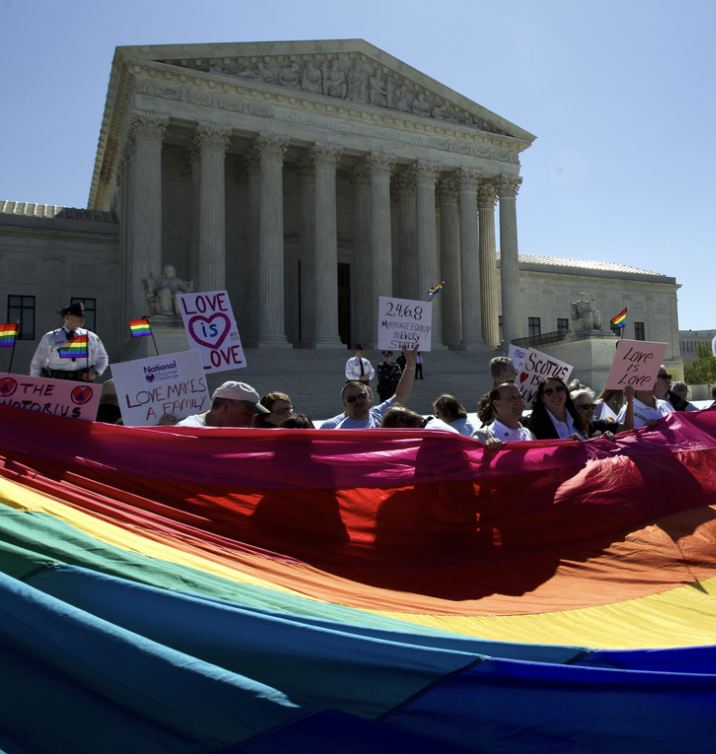
If we’ve learned one thing from the recent Supreme Court dockets, including the Dobbs decision overturning Roe v Wade, it’s that we need to get outdated laws off the books. We can’t rely on the Supreme Court to uphold a longstanding precedent confirming a basic human right.
Prop 3 will repeal Prop 8, making sure that California doesn’t accidentally ban same sex marriage again if the Supreme Court reverses its Prop 8 decision. The socially conservative, civil-rights-hating Supreme Court has made some shocking decisions. It’s only a matter of time before LGBT rights are back on the chopping block.
In addition to BEING THE RIGHT THING TO DO, Prop 3 may serve another important purpose. There are a few key House races in California in this election, and Prop 3 could pull LGBT+ friendly folks out to vote. That is, if voting for Kamala wasn’t enough motivation.
One friend in state government told me, “Control of the House [of Representatives] is going to be decided in California and New York. We have five swing districts – four Republican seats we can pick up and one that Democrats are defending.” If Prop 3 can help energize progressive voters in those districts, it might help change the balance of power nationwide. Can’t wait to see how it plays out.
Prop 4 – Bond measure for firefighting, water projects, climate resilience
This one’s all about protecting California from turning into a fiery, flooded hellscape. Prop 4 would allow the state to borrow $10 billion to fund various climate change mitigation and adaptation efforts. Specifically:
- $3.8 billion for drinking water and groundwater projects
- $1.5 billion for wildfire and forest programs
- $1.2 billion for sea level rise protection
The Legislative Analyst estimates it will cost the General Fund about $400 million annually for 40 years to repay the bond – totaling about $19 billion over time. Ouch, that stings.
But! Supporters argue that it’s an investment in the state’s climate resilience. California desperately needs the money to proactively address climate change impacts, and there really is no other funding source. Critically, it also benefits disadvantaged communities: at least 40% of funds must be used in lower-income communities most impacted by climate change.

Just about everybody supports the bond, and my sources say it is polling well (it only needs 50%+1 to win). The main supporters are (surprise!) environmental organizations. It also has the support of labor unions and Democratic lawmakers.
Opponents include a few Republican elected officials and the people who dislike taxes generally. They say it increases the state’s debt (duh!), doubling costs due to interest (yes, that’s how bonds work unfortunately), and they object to the portion of the costs that go to administration. They also say that the state should find other funding sources for these projects.
“Before approving more borrowed money, voters deserve to see results from previous investments. Bonds come with long-term financial burdens that eventually can cut into essential public services.”
– Republican State Senator Brian Jones [Source: Ballotpedia.com]
Friends in state government tell me that Prop 4 was placed on the ballot after many years of negotiations with the right stakeholders. Yes, bonds are expensive, and yes, it’ll cost us for the next 40 years. But unless you’re planning to live in a houseboat on a sea of regret, we need this.
In related news, did you know:
· 2024 was the hottest summer on record?
· The beloved Joshua tree is facing extinction?
· 24–75% of California’s beaches could be completely eroded by the end of the century?
· Los Angeles imports more than 85% of its water from snowmelt in Northern California and the Colorado River basin?
· In 2020, wildfires burned 4.2 million acres in California, more than double the area burned in any previous year?
Vote yes.
Prop 5 – Lower the vote threshold from 66.67% to 55% for local bond measures
Oh man. This suuuuuuper technical measure made my eyes glaze over when I read it. But here’s the simplest way to think about it: If you like public services and hate red tape, vote yes. If you generally don’t like taxes, and think it should stay difficult for local governments to borrow money, vote no.
While state bonds (like Prop 2 and Prop 4, above) can pass with only a simple majority (50%+1), local bonds usually require a two-thirds supermajority (66.67%) to be approved. Prop 5 is a constitutional amendment that would lower the voter approval requirements for local housing and infrastructure bonds to 55%.

The voting threshold for local bonds has gone back and forth a few times. Until 1978, local bonds were approved with only 50% of the vote. That year, Prop 13 came along and (among other things) made it much harder for local governments to get bonds approved, raising the threshold to two-thirds (or 66.67%). Then in 2000, voters approved Proposition 39, which carved out local school bonds, lowering the target to 55% for those specific measures. (There are other limits on those bonds, but that’s not important right now).
Naturally, after the vote threshold changed in 2000, a LOT more school bond measures started passing. From 2001-2021, 81% of the 1404 school bond measures proposed under the new rule were approved. This is 26% higher than the pass rate for bonds under the previous 2/3 threshold.
So – local and state government officials have been wanting to make it easier for housing and infrastructure bonds to pass. And they placed Prop 5 on the ballot after a multi-year negotiation involving lots of nerds and experts.
Supporters of Prop 5 include affordable housing advocates, good government groups like the League of Women Voters, labor groups representing firefighters and construction workers, the California Democratic Party, and the Chan-Zuckerberg Initiative. They argue that California desperately needs to build more housing, transportation and public health infrastructure, and say that Prop 5 will make this easier.
“We think it’s a fairer way to make spending and taxing decisions. Requiring supermajority support gives disproportionate power to the naysayers to decide the appropriate level of taxation and spending. Why should one-third of voters get to set priorities for an entire community?”
– Los Angeles Times Editorial Board

Opponents include the Republican Party, the Chamber of Commerce, as well as the usual business and taxpayer groups who generally dislike taxes. As the Howard Jarvis Taxpayers Association said, “In future years, municipal budgets could become increasingly strained as more and more revenue gets diverted to repay investors for old debt.” (BTW, the Howard Jarvis Taxpayers Association has opposed every single tax and bond measure on every single ballot since the beginning of time).
The state needs to build more housing, and Prop 5 seems like a reasonable step in the right direction. (BTW if you want a deep dive on why housing construction hasn’t kept up with demand, listen to this fascinating episode of The Daily podcast by the NY Times). I say we give it a shot and see if it improves the housing shortage. Vote yes.
Prop 6 – Banning forced prison labor – YES
It’s 2024, and somehow, we still need to vote on whether prison labor should be forced. Spoiler: It shouldn’t. No one is campaigning against this measure, so voting yes is just a formality. I won’t waste (much of) your time except to give you a basic overview.

Prop 6 is a constitutional amendment to limit forced labor and protecting prisoners who refuse a work assignment. The state legislature’s Black Caucus engaged in a years-long process to refine the measure to earn bipartisan support.
Supporters include criminal justice reform groups including the ACLU, good government groups like the League of Women Voters, and labor unions. They argue that Prop 6 is aligned with modern views in favor of human rights and against slavery, and that it is a small step in the direction of reparations.
“[Prop 6] prioritizes rehabilitation for incarcerated people. Incarcerated people should be able to choose jobs and shifts that allow them to continue their education, use the law library, get counseling, and participate in other rehabilitative programs that facilitate growth and transformation.”
– Lori Wilson, State Assembly (D)
While there is no official opposition, the Mercury News & East Bay Times Editorial Board wrote, “California’s prisoners should not be subjected to abuse by their jailers. But inmates should not be legally empowered to dictate what chores they’re willing to do while behind bars. That’s why voters should reject Proposition 6, a measure cloaked in language about slavery and involuntary servitude that’s really about prisoners being able to turn down work assignments.”
To me, it’s less about slavery or reparations, and more about dignity. Just because you serve time doesn’t mean you lose all your rights. Even convicts should be treated as human beings, and they shouldn’t be forced into work assignments that conflict with their own journey to rehabilitation. Vote yes.
Prop 32 – Increase minimum wage to $18 an hour – YES
OK, so this one feels a bit like showing up late to the party. Minimum wage is already creeping up to $18 under current law, but Prop 32 would lock it in by 2026. Is it groundbreaking? No. Is it necessary? Also no. But I’m still supporting it, so hear me out.
A 2016 law set the minimum wage at $15 in 2022, and it allowed for future increases tied to inflation – which is why the current minimum wage is $16. And it could go up by as much as a dollar every year, depending on changes to the Consumer Price Index, so it might actually be up to $18 by 2026 under the current law.

If you’re confused as to why Prop 32 is necessary, that’s understandable. Many (most?) low wage workers in California already make $18 or more. Last year, in fact, unions were able to secure $25 an hour for healthcare workers, and $20 an hour for fast-food workers. West Hollywood, Berkeley and San Francisco have already increased their minimum wage rates beyond $18 an hour.
So why is Prop 32 on the ballot?
Entrepreneur and investor Joe Sanberg paid to get it on the ballot, and has contributed nearly $10.9 million to support the campaign. He argues that the measure is a response to the rising cost of living and the fact that wages have not kept pace with inflation.
[He’s right about that. $18 an hour still isn’t enough income to rent a closet in San Francisco.]

[Credit: Al Seib/LA Times]
Sanberg wrote the measure without consulting any of the usual experts, like labor unions, advocacy groups, or the legislature, thereby pissing off a lot of people in Sacramento, who probably would have made the case for a higher number. And now they will have to wait years before proposing another wage hike.
(In 2019, Sanberg was rumored to be eyeing a run for President of the United States. And it’s possible that Prop 32 is an effort to make a name for himself for a possible future campaign).
Even if the unions and Democrats don’t like the way it got on the ballot, they have no choice but to support it. They know that wage increases – no matter how small – improve the economic well-being of workers, and help fight the impacts of poverty. Also – what message would it send if it loses? That would do serious damage to the efforts to increase the minimum wage in future years. Besides, it’s polling well.
Some pro-business groups like to claim that increases in the minimum wage will hurt job creation. To the contrary, study after study has shown that raising the minimum wage actually supports job growth. Just this week, state and federal employment data has shown that in the four months after California raised its minimum wage in the fast food industry to $20 an hour, the industry has actually ADDED 11,000 jobs.
There are no identified committees opposing the initiative. Business groups who normally oppose wage hikes aren’t fighting Prop 32 it because it DOESN’T ACTUALLY DO THAT MUCH, and it probably keeps bigger wage increases off the ballot for a few more years.
Holding my nose and voting yes. But a small part of me wants to vote no, just to spank Joe Sanberg.
Prop 33 – Repeals Costa-Hawkins Rental Housing Act – NO
This prop would repeal the state law that limits rent control. Before I analyze the measure, it’s important to explain the current situation.

In 1995, voters approved the Costa-Hawkins Rental Housing Act, which pre-empted local rent control laws, exempting all new buildings first occupied after February 1, 1995, and all single family homes. As a concession to landlord groups, Costa-Hawkins also prohibited rent control laws that tell a landlord what they can charge a tenant when they first move in (a.k.a. “vacancy control”).
In 2019, the state’s housing crisis caused the legislature to approve AB 1482 (the California Tenant Protection Act) to add some new tenant protections. The law limits annual rent increases and removes the right of landlords to evict tenants without just cause. It also changed the types of buildings covered by rent control: all new buildings lose their exemption after 15 years. This is meant to encourage developers to build new apartment buildings, without their income being limited by rent control for the first 15 years.
Even after this law was passed, renters rights advocates have made repealing Costa-Hawkins their holy grail. They want to eliminate all restrictions on rent control laws, giving localities free reign to impose rent control on any rental property within their borders, and to eliminate vacancy control. Prop 33 would do just that.
The AIDS Healthcare Foundation (see also Prop 34 – below!) is leading the campaign in favor of Prop 33. The embattled organization also sponsored two similar initiatives in 2018 and 2020, donating $63.1 million in support of those measures. Both lost.
Supporters of Prop 33 include the Senator Bernie Sanders, the California Democratic Party, the California Nurses Association, ACLU of Southern California, and housing rights advocates. They say their measure is critical to keeping Californians in their homes and ensuring new residents can afford to live here. It would give local governments more tools to address the housing affordability crisis and would allow cities to limit rent increases on vacant units. Supporters have raised more than $40 million for their campaign.
Opponents of Prop 33 have raised over $66 million. They include a bipartisan coalition of Democrats and Republicans, the California Apartment Association, California for Responsible Housing, construction-related unions, and pro-housing advocates. They argue that the measure will discourage new housing construction, will make California’s housing crisis worse.
“[R]esearch shows that while rent control can protect some existing tenants, it also tends to disincentivize the production of new housing — which is key to bringing down costs — and the maintenance of existing housing while reducing the supply of existing rental housing.”
– SF Chronicle Editorial Board
Opponents also argue that in the cities that have rent control, rental housing tends to deteriorate over time because landlords – whose revenues are limited – don’t spend money to maintain their buildings. This reduces property values by up to 25%, affecting homeowners’ investments and life savings, and reducing local property tax revenues. The California Legislative Analyst’s Office estimates this reduction in local property tax revenues to be at least tens of millions of dollars annually.
Here’s more from the Chronicle:
“Studies show that robust housing supply, not rent control, is the most essential factor in keeping housing prices down. Rents are currently plummeting in Austin, Texas, despite intense demand from people moving there because of the city’s vigorous development of new housing. The same is true of Tokyo, which has kept rental prices stable by adding more units of housing in recent years than exist in all of New York City. Housing supply was also at the core of Houston’s successful effort to move 25,000 homeless people indoors.”
In a strange twist, some conservative-leaning cities who don’t want to build more housing may be supporting Prop 33. In fact, the Trump-supporting Mayor of Huntington Beach said the quiet part out loud: he is supporting Prop 33 because it will help the city avoid building new housing. Huntington Beach has sued California over its housing laws, which are intended to compel every city in California to participate in solving the housing crisis.
Regardless of whether you are a homeowner, a landlord, or a renter who has benefited from rent stabilization, I urge you to consider more than your personal interests when voting on this measure.
I agree that the cost of rent across California is outrageous, but I think that repealing Costa-Hawkins is a blunt instrument that only helps a portion of renters in certain cities. What will help EVERYONE who struggles with the cost of living in this state will be to build more housing. And Prop 33 will thwart those efforts. Vote no.
Prop 34 – Revenues from federal discount prescription drug program –YES
This ballot measure is just my type: it’s smart, it’s subversive, and it stands up for democracy.
On its face, Prop 34 is so wholesome: it’s about making sure certain nonprofit health care providers spend 98% of a specific kind of revenue on direct patient care. It also authorizes statewide negotiation of Medi-Cal drug prices. Makes perfect sense; both are good ideas!
The revenues in question come from the federal prescription drug discount program, known as 340B, which allows nonprofit health care providers serving low-income patients to buy prescription drugs from manufacturers at a discounted price. Providers can then charge insurers full price for the drugs — and pocket the difference. This program helps many nonprofits stay afloat and provide better care for poor patients. The 340B program doesn’t put many restrictions on spending of those revenues, and a few nonprofits have used the money for questionable purposes. For example, according to a New York Times investigation, one nonprofit actually used 340B revenue to build a luxury apartment complex and secure naming rights to a sports training complex in Richmond, Virginia.
But everyone knows that Prop 34 is aimed at a putting a different shady nonprofit out of business and running its polarizing leader out of politics. The Los Angeles based AIDS Healthcare Foundation (See Prop 33, above), and its leader Michael Weinstein, have made a lot of enemies.
“Weinstein is toxic,” “God, I can’t stand that guy,” and “I’m actually one of the few people who can work with him” are what I heard from elected officials who know him personally.
According to Politico, Weinstein has funneled more than $100 million from his nonprofit into political causes included sponsoring eight ballot measures, some of which are only loosely connected to healthcare or AIDS. Inexplicably, he also waged a public battle against the pill that prevents HIV infection. He snubs his nose at the laws limiting the political activity of nonprofit corporations, and he enthusiastically uses millions of tax-free dollars on his pet causes.

Some lawmakers have urged state investigations, and complaints have been filed with the state’s Fair Political Practices Commission claiming that the foundation has violated multiple political finance laws. And the organization has also faced scrutiny for safety violations in housing it operates in Los Angeles, according to an LA Times investigation, which found dangerous conditions and disrepair in its Skid Row properties.
The main proponent of Prop 34 is the California Apartment Association, which, not coincidentally, is the main opponent of Weinstein’s Prop 33 (above). Other supporters include folks who are also fed up with Weinstein’s antics, like the California Republican Party, the Firefighters Union, some Democratic elected officials, and multiple healthcare organizations like the ALS Association, the California Chronic Care Coalition, and the San Francisco Women’s Cancer Network.
Supporters argue that Prop 34 ensures public healthcare dollars are spent on patient care, and it closes loopholes allowing for misuse of funds on non-patient care expenses. It also may help lower drug costs for patients.

[Credit: AHF]
Opponents of Prop 34 include AIDS Healthcare Foundation (of course), National Organization for Women, Consumer Watchdog, League of Women Voters of California, the SF Chronicle editorial board, the Mercury News Editorial Board. They argue that Prop 34 is a cheap revenge initiative, that could set a dangerous precedent of using ballot measures to target specific organizations. Prop 34 is merely retaliation for the AIDS Healthcare Foundation’s rent control efforts.
Did I mention I’m not a fan of California’s direct democracy process? Weinstein is the biggest offender of all the people who put unnecessary issues on the California ballot. I estimate that he has cost ME PERSONALLY a dozen hours of research and writing time because he qualified measures that hadn’t been fully vetted, didn’t need to be there, and that ultimately lost.
I should note that even if Prop 34 passes, it has a potential legal hurdle: it is arguably a “bill of attainder,” which is unconstitutional. A bill of attainder is a law that is written to punish a single organization, often intended to bypass the normal judicial process. In this case, Prop 34 is written to apply to any managed care organization, that participates in the 340B program, that has spent more than $100 million on issues other than direct patient care, and has 500 or more health and safety violations on their low-income properties. Ahem. There’s only one organization that matches all of those oddly-specific criteria.
Even so, I’m a yes vote, because I do believe that 340B funds should be spent on patient care, and not be wasted on Weinstein’s pet projects.
Prop 35 – Tax on health plans to fund Medi-Cal – YES?
Oh ho ho, this one has a boring subject but it’s story is juicy. The whole purpose of Prop 35 is to slap the Governor and the state legislature for alleged misuse of tax revenues. This was another hard one for me, and I went back and forth on whether to support it.
In 2009, the voters approved a temporary tax on managed care organizations (“MCO”) (think Kaiser, Aetna, Blue Shield) that is set to expire in 2026. The “MCO tax” helps state government pay for Medi-Cal. While the tax was intended to improve the quality of care, in this era of budget deficits, state government has been, ahem, “re-directing” some of those funds to balance the budget in areas that have nothing to do with healthcare.
I won’t go into more detail about how Prop 35 would reallocate the revenues because it makes my head hurt, but if you want to know more, check out Ballotpedia’s explanation.
A coalition of healthcare providers and organizations was fed up with state government using MCO tax revenues for non-healthcare purposes, and they put Prop 35 on the ballot to: (1) make the temporary tax permanent, and (2) force the state to dedicate the revenues to health care.
They argue: “The Protect Access to Healthcare initiative will improve access to health care, reduce emergency room wait times for all Californians, make prescription drugs more affordable and expand our health care workforce. This initiative represents the most important investment in California’s health care in our state’s history and will increase access to care well into the future.” – Donaldo Hernandez, M.D., president of the California Medical Association
There’s some drama here because it bypassed the usual political channels. According to one source, Governor Newsom is “enraged,” because if it passes, it will cause the state major budget deficit headaches.
I think that state government knows it doesn’t have a leg to stand on, because there hasn’t been an organized opposition to Prop 35 until a few weeks ago. The small group in opposition includes the League of Women Voters, which says bluntly, “Prop 35 would [make the MCO tax] money unavailable for other priorities.”
Supporters include the entire healthcare industry, both the Democratic and Republican parties, big business. They have raised more than $48 million in favor of the measure. The opposition has raised exactly $0.
I’m a YES on this one, but… I also found the Chronicle’s “no” endorsement compelling. I share the concern about funding gaps in the state budget, and how Prop 35 would make it the state government’s budget process less flexible. I guess that’s why we elect a legislature: to figure it out.
Prop 36 – Increase drug crime and theft penalties, allow a new class of crime to be called treatment-mandated felony – NO?
I went back and forth on this one. It is certainly well intentioned, but ultimately, I don’t think it’s the right solution for a seriously vexing problem.
In 2014, voters passed Prop 47, an important criminal reform measure that reduced the prison population in California and reclassified many low-level crimes from felonies to misdemeanors, including drug possession, petty theft under $950, and receiving stolen property. By 2024, Prop 47 has saved the state approximately $816 million in prison spending, and those savings have been reinvested into mental health and drug treatment programs, as well as recidivism reduction programs. What an effective reform!
Fast forward to 2024. Petty theft seems to be rampant in every county in California. I live in Oakland, and many of my local stores have started locking up entire cases of merchandise and requiring security guards to check your receipts at the door. I’ve personally witnessed multiple auto break-ins.

The state’s District Attorneys and major retailers like Walmart, Target, and Home Depot have been fed up with retail theft, and they claim that Prop 47 was too lenient on shoplifters. They also say that Prop 47 took away the ability of criminal courts to mandate drug treatment in lieu of prison time, for the addicts who they believe are behind much of this crime. They put Prop 36 on the ballot to get tougher on certain minor crimes, reclassifying some theft and drug possession crimes to felonies from misdemeanors, lengthening some sentences and giving judges the option of mandating drug treatment.
After Prop 36 qualified for the ballot, the legislature put together a package of bills addressing retail theft and auto break-ins. The bills target organized crime rings and prolific thieves with harsher punishments, and close loopholes to allow prosecutors to convict auto break-ins more easily. As a result of these reforms, the major retailers have dropped their support of Prop 36.
The remaining proponents include some tough-on-crime groups like the Republican Party of California, California District Attorneys Association, and California State Sheriffs’ Association, as well as dozens of local elected officials (Democratic and Republican), and small and local businesses
“[Prop 36] will make targeted but impactful changes to our laws around fentanyl and help us tackle the chronic retail theft that hurts our retailers, our workers, and our cities. I fully support this measure and know it will make a meaningful difference for cities across California.”
– SF Mayor London Breed
I am sympathetic to the retail theft issue, as this is a real problem in our communities. However, increasing penalties for drug possession is just inhumane. More importantly, multiple studies have shown that increasing criminal penalties doesn’t deter crime. What deters crime is the certainty of getting caught. Improving enforcement – like more funding for police foot patrols and giving cops more tools to do their jobs effectively – will do more to prevent shoplifting than increasing penalties for those who are caught.
“Police could stop petty thieves now if they made misdemeanor arrests, as they can and sometimes should under current law. But they don’t, because they argue it’s not worth their time. They’re asking voters to change the laws to fit their accustomed practices, rather than update their practices to fit the laws they’re asked to enforce. Californians should expect police to follow the law, rather than the other way around.”
– Los Angeles Times Editorial Board
Experts also appear to agree that theft is an act of desperation and poverty, which means that addressing the root cause (such as housing, family support, social connection, drug treatment) is a better strategy to prevent crime than increasing criminal penalties. Prop 36 will likely reduce funding for services like employment assistance and housing because there will be less savings from prison spending under Prop 47. Prop 36 would also deepen mass incarceration, which tears communities and families apart. Critics of Prop 36 also point to racial disparities in drug possession convictions, and they argue that Prop 36 will both exacerbate these disparities and reverse progress in reducing prison populations.
Supporters of Prop 36 argue that the proposed law will help more drug addicts to break out of their cycle of poverty, addiction and petty theft, because mandatory drug treatment will be an option for those convicted. However, twenty-two counties in California don’t have any government-funded drug treatment facilities available, and so prison will be the only option in those counties. Judges will have discretion as to whether they mandate treatment or jail time, and you better believe that they will bring their own race-based biases to those decisions.
“Prop. 36 takes us back to the 1980s, mass incarceration, it promotes a promise that can’t be delivered. I would ask those who support it, particularly mayors: Where are the treatment slots, where are the beds? Twenty-two counties don’t have one residential treatment facility… I mean, they’re lying to you.”
– Governor Gavin Newsom
Opponents of Prop 36 include Governor Newsom, the California Democratic Party, the League of Women Voters, criminal justice reform groups and civil rights organizations like the ACLU of Northern California, the Los Angeles Times Editorial Board, some Democratic Mayors of major cities. So far, they are WAY outspent by the Yes on 36 campaign by 45-to-1! And the Yes on 36 campaign is polling very well. Sigh. I am voting no anyway, and hoping for the best.
Thanks for reading! If this guide saved you a few hours of research, please calculate your hourly rate and deposit that amount in my bank account. Kidding! Please throw a few pennies in the jar to help cover my costs. I don’t accept donations or advertisements from campaigns, so I rely on my readers to support what I do.
Please also consider sharing on social media. Help me expand my reach. Thank you!





 Vote Alix