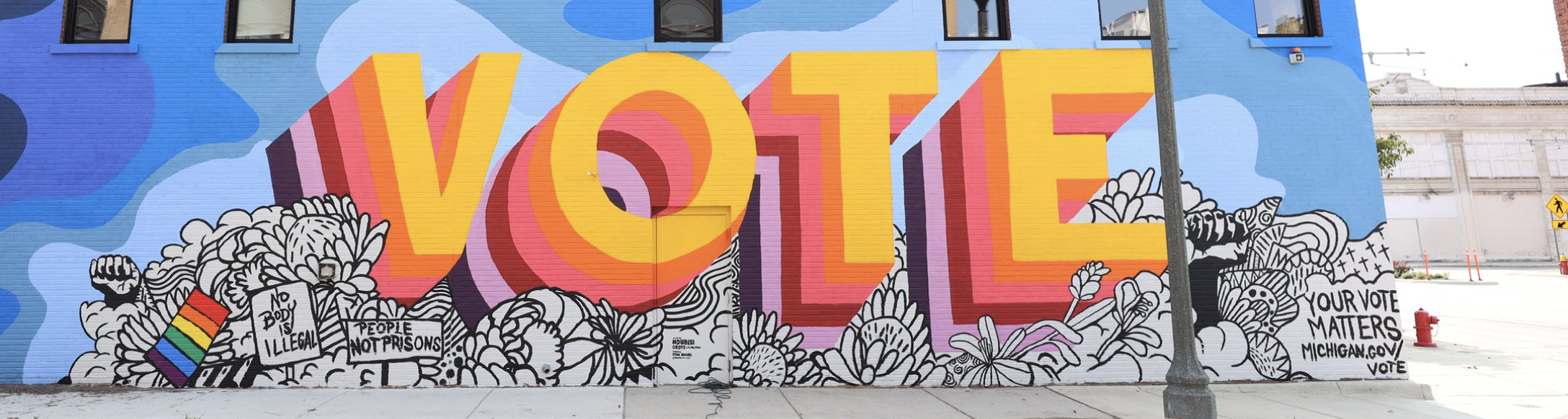

This ballot is so long, I’m publishing my endorsements a few measures at a time. Here are my thoughts on Propositions 37, 38 and 39 on the November 2026 California ballot.
You can find my endorsements on Props 1 through 5 here and Props 40, 41 and 42 here. Props 43-45 coming soon.
The short version, for those of you who weren’t going to read the whole thing anyway:
- Prop 37 (State-Backed Down Payment Loans for New Homes): YES (meh)
- Prop 38 (Immunology Research Bonds): NO
- Prop 39 (Voter ID Constitutional Amendment): HELL NO
Disclaimers
Before we begin, I should clarify that the opinions I express in my voter guides are my own and should not be attributed to my clients, my little girl, or my subversive artist collective. Please send all hate mail to me at info (at) votealix.com.
In the interest of full disclosure, I’m a single mom, a liberal Democrat, and an attorney whose passions include making government work better, helping professionals lead healthier lives, and protecting our environment for future generations. I’ve worked on/volunteered for more political campaigns than I can count, and I also like long walks on the beach.
Prop 37: State-Backed Down Payment Loans for New Homes. YES (Meh).
What it does: Prop 37 lets the state housing finance agency sell up to $25 billion in bonds and lend the money to middle-income homebuyers as second mortgages. Buy a new $1 million house and you put down $30,000 (3%, and it has to be your own money, so your rich uncle can’t loan it to you). Prop 37 lends you $170,000, and a regular bank covers the rest. A 3% down payment is a lot easier than 20%, which is what keeps many people renting forever.

The catch is that the home has to be newly built, you have to be its first buyer and actually live in it, and your household can’t earn more than 200% of the area median income.* It’s a “revenue bond,” meaning the homeowners who receive the loans repay the bonds through their mortgage payments. That’s why the Legislative Analyst finds “no direct state or local costs,” a phrase you will almost never see on a $25 billion bond. Prop 38, sitting right next to it on your ballot, shows how the usual kind works: $8.4 billion in general obligation bonds that will cost the General Fund about $500 to $600 million a year for 20 years.

The backstory: Prop 37 took five years to write, and it makes a lot of people happy: middle class home buyers, real estate developers, realtors, good government nerds, and construction trades. It’s aimed at the “missing middle”: people who can handle a mortgage payment but can’t save up $200,000 while also paying $3,500 (or more) a month in rent. And the demand for this type of program is real. In 2023 the state offered $300 million in down-payment assistance, and it was gone in less than two weeks. The signature drive was paid for by the Realtors, the Carpenters union, and Building a Better California (Sergey Brin again!), which has put $6 million into this one. (This might be too inside baseball, but I have a theory that Brin supported this measure to purchase the building trades’ support for Props 41 and 42, the anti-billionaire-tax measures.)
Supporters and opponents: The Yes side is a who’s who of California Democrats: Treasurer Fiona Ma, Controller Malia Cohen, Xavier Becerra, Katie Porter, Tony Thurmond, Matt Mahan, Antonio Villaraigosa, Darrell Steinberg, and the California Democratic Party, along with the Carpenters and the Realtors. The San Francisco Chronicle endorsed it, although its endorsement sounds about as excited as mine: “Prop 37’s scope is limited enough that we don’t think it will fundamentally change California’s housing landscape.” Nobody even bothered to submit a ballot argument against it.
The case for: It’s a well-designed program. The money goes only to new homes, so it doesn’t bid up every existing condo in the state. It’s a loan, not a grant, and it costs the General Fund nothing.

The case against: California’s housing problem isn’t a shortage of buyers. When prices went bananas in 2020 to 2022, builders still didn’t build much more, because zoning, fees and construction costs are what hold them back. So many of these loans will go toward homes that would have been built anyway, probably out in the exurbs, where the commute is long and the fire insurance is theoretical.
My take: Meh, it’s fine. It will help some families buy a home sooner, and it won’t cost taxpayers a dime. What bugs me is that it’s on the ballot at all. If we learn in five years that it isn’t working, fixing it takes a 60% vote of the Legislature, the governor’s signature, and probably a lawsuit. This should have been a bill. It’s a shrug of a yes.
Vote YES, and keep your expectations modest.
Prop 38: Immunology Research Bonds. NO.
I’ve been doing this a long time, and this one still got me. I saw the title and got very excited: “OOH! Yessss! The Trump administration is taking a chainsaw to federal research funding, and here comes California in a lab coat to save science.” I had my enthusiastic endorsement half-written in my head. Then I read the fine print, which is where ballot measures keep their secrets.
What it does: Prop 38 lets the state borrow $8.4 billion through general obligation bonds for immunology and immunotherapy research. That’s the science of getting your immune system to do its job better: cancer immunotherapies, vaccines, engineered immune cells, and maybe someday treatments for Alzheimer’s, heart disease, and Parkinson’s. Great stuff. The General Fund would back these bonds, which means you do. The Legislative Analyst estimates the tab at roughly $500 to $600 million a year in interest for about 20 years. Yikes.
(In case you’re curious, the $500m-$600m in interest goes to bondholders, meaning: mutual funds, insurance companies, and wealthy individuals.)
The money splits in half. About $4.2 billion goes to competitive research grants for California public universities and nonprofit research institutions. The other $4.2 billion goes to one “qualifying” UC-affiliated nonprofit immunology institute. Hold that thought. At least $4.2 billion overall has to go toward cancer, heart disease, and Alzheimer’s.
It also comes with some genuinely creative strings. Treatments developed with the money must generally be offered in California at a 20% discount. Mostly that’s a discount for your insurance company, although patients paying coinsurance or no insurance at all would feel it too. Recipients have to buy at least half their goods and services from California suppliers when reasonably possible. Admin costs are capped at 2%. And the state gets 10% of revenue from any discoveries, which goes first toward paying off the bonds. That last one is doing a lot of heavy lifting in the campaign ads. Stick with me, we’ll get there.

The backstory: The Legislature didn’t write this. It’s a citizen initiative, and the “citizen” in question is billionaire surgeon and inventor Gary Michelson. Michelson also happens to be co-founder and board chair of the California Institute for Immunology and Immunotherapy, a shiny new nonprofit affiliated with UCLA that he and his wife have put at least $120 million into.
Now, remember that $4.2 billion for one “qualifying” institute? Prop 38 never names it. It doesn’t have to. The initiative just lists the qualifications, and they’re remarkably specific. The lucky winner must have been founded before 2025, specialize in immunology, be affiliated with a UC campus whose medical center hits certain patient-volume numbers, meet physical size requirements, and have received two donations of at least $50 million for specified research programs. And wouldn’t you know it, the Michelsons once donated $50 million for programs whose descriptions closely match the initiative’s language. What are the odds.
CalMatters dug in and confirmed that exactly one qualifies. Guess which.
It is very clearly designed to support a specific nonprofit.
Political scientist Sarah Hill, to CalMatters
In fairness, Michelson isn’t personally pocketing $4.2 billion. It’s a nonprofit research institute, not a yacht. But you’d never know any of this from your ballot, which describes the measure very deceptively.
There is precedent for the basic idea. Voters approved $3 billion for stem cell research with Prop 71 in 2004 and another $5.5 billion with Prop 14 in 2020. Prop 38 wants to do for immunology what those did for stem cells, except with half the money pre-addressed to one mailbox.
Who supports it: An impressive lineup: the Michael J. Fox Foundation, Alzheimer’s Association, Alzheimer’s Los Angeles, ALS Association, National MS Society, Kidney Cancer Association, Melanoma Research Alliance, Prostate Cancer Foundation, American Nurses Association/California, American Association of Immunologists, City of Hope, and the California Democratic Party.

Now follow the money. As of September 15, the Yes campaign had raised about $27.2 million. Well over $20 million of that came from Michelson and related entities. Another $5 million came from billionaire Meyer Luskin, who is (surprise) also a co-founder of the institute. And the California Democratic Party chipped in a whopping $1,247, which I assume covered the parking. So much for a grassroots movement. Nearly all of the money comes from the people behind the institute that gets half the bond money. Ick.
Who opposes it: Nobody with a checkbook. As of September 15, the No side had raised zero dollars, and independent spending against the measure was also zero dollars. There are real opponents, though, just broke ones. Robert Kaplan, a Stanford health-policy scholar and former NIH associate director, wrote the official ballot argument against it. The League of Women Voters of California opposes it, as do California Health Policy Strategies and the Orange County Register editorial board. So do Democrat Steve Maviglio and Republican Jon Fleischman, a bipartisan pair of political strategists who are both cancer survivors. When those two agree on something, pay attention.

The case for Prop 38: Prostate Cancer Foundation CEO Gina Carithers: “Immunotherapy is transforming the future of cancer care.” No snark here, because she’s right, and I’ve seen it up close. Two years ago, my beloved Aunt Lauren was diagnosed with terminal cancer. Cutting-edge immunotherapy gave her at least nine more months. It truly is a miracle, and it’s making some cancers far more treatable than they were even a decade ago.
It already treats melanoma, leukemia, and lung cancer, and researchers are chasing immune-based approaches to Alzheimer’s, heart disease, Parkinson’s, and ALS. Federal funding is now about as reliable as a Tesla on autopilot, and California’s world-class scientists need a stable, long-term funding source that federal politics can’t touch. Billions spent in California labs would also mean research jobs, biotech startups, and intellectual property that stays here. And with the 20% price discount and the 10% revenue share, Californians could actually get something back.
The case against Prop 38:
Half the money goes to one institution, by design. If the goal is great immunology research, why not put all $8.4 billion through competitive grants and let Stanford, UCSF, UCLA, UCSD, Gladstone, City of Hope, and everyone else fight for it like scientists normally do? As Kaplan dryly notes, “There is a lot of talent in immunology, immunotherapy research in California.” It isn’t all at one address in Westwood. LA Times columnist George Skelton: “The hang-up for me and others is that the ballot initiative was crafted to virtually assure that half the bond money would go to one outfit.”
It’s ballot-box science. Prop 38 locks in which branch of science California prioritizes for decades. Research priorities are supposed to change as scientists learn things. Twenty years from now the hottest field in medicine may be something nobody’s invented yet, and we’ll still be paying off immunology. I love you, voters, but most of you should not be setting the state’s biomedical research agenda. Neither should I.
Bonds are a weird way to pay for research. We usually borrow for things that stick around, like schools, reservoirs, transit, and housing. Research is an ongoing expense, and most of it will never produce a marketable drug. That’s not a flaw, it’s just science. But putting it on the state credit card makes it about 10% more expensive than paying cash, per the LAO. Maviglio and Fleischman: “The debt is guaranteed. The discoveries and royalties are not.”
We’ve heard “it pays for itself” before. The 2004 stem cell bond made the same promise about royalties rolling in. By 2022, according to the League, the stem cell agency’s royalty fund held $15.6 million. On a $3 billion bond. That’s roughly the return you’d get from finding a twenty in your winter coat. The research did real good, but medical breakthroughs and paying back the bond are two different things, and the LAO says any Prop 38 payback is uncertain and could take decades.
Why I’m voting no: I want California to step up where Washington has walked off the job. I really, really do, and after what immunotherapy did for my aunt, voting no on this one stings. If this were $8.4 billion in open, competitive grants, I might squint past the price tag and vote yes. But it’s half a billion dollars a year out of the General Fund for twenty years, and half of the money goes to one organization whose founders wrote the eligibility rules and bankrolled the campaign. A billionaire drafting a ballot measure so his own institute gets $4.2 billion of public money is not a playbook I want to reward, however good the cause.
Vote no, with a wistful sigh and a strongly worded note to your legislators.
Prop 39: Voter ID Constitutional Amendment. HELL NO.

Let’s make this quick. Prop 39 is California’s knockoff of Trump’s SAVE Act, and its biggest backer is Richard Uihlein, a Trump-loving packaging billionaire from Wisconsin/Illinois who has put $17 million into rewriting the voting rules of a state he doesn’t live in. Do I need to tell you more? I’ll tell you a little more, but honestly, you could stop reading here.
What it does: Prop 39 would require you to prove your identity every single time you vote, and it would write that requirement into the California Constitution. Vote in person? Bring a government-issued ID. Vote by mail? When you register, you’d designate an ID number, and every time you return a ballot you’d have to write the last four digits of that exact number on the envelope. Put your driver’s license digits on the envelope when you registered with your Social Security number? Congratulations, your ballot doesn’t count. The state would offer a free ID card, and counties would report yearly on how many voters have had their citizenship “verified.” The Legislative Analyst puts the cost at tens of millions up to the low hundreds of millions of dollars per year, plus startup costs.
In case you’re wondering: California already verifies voters. You attest to citizenship under penalty of perjury and provide a driver’s license or Social Security number when you register, and mail ballots are checked by signature. Prop 39 doesn’t fix a missing safeguard. It adds a new way for your ballot to get tossed.
How it got here: This is a citizen initiative led by Republican Assemblymember Carl DeMaio and Republican state Sen. Tony Strickland, who turned in more than 962,000 valid signatures. The proponents have been insisting this is a moderate, homegrown idea that has nothing to do with the SAVE Act. Sure. They’ve also spent a lot of time in court: they sued to change the Attorney General’s ballot title and lost, and they withdrew claims that Prop 39 would make voting “easier,” improve privacy, and save money after a judge found those claims misleading. That’s why your ballot will describe this measure, accurately, as: “Prohibits Citizens From Voting Unless They Present Government-Issued Identification.” Couldn’t have said it better myself.
The case for it: It’s hard to say it with a straight face. Supporters say requiring ID boosts “public confidence in elections,” that signature matching is subjective and sometimes rejects legitimate ballots, that most people already have ID anyway, and that the free state ID card solves the rest.
Supporters: Richard Uihlein ($17 million and counting), Republican Carl DeMaio’s Reform California (over $3 million), Nicole Shanahan (yes, RFK Jr.’s 2024 running mate, because of course), billionaire venture capitalist and Trump donor Douglas Leone, the Trump-supporting crypto-enthusiast Winklevoss twins, the California Republican Party, Howard Jarvis Taxpayers Association, and Republican former Secretary of State Bill Jones. Common Cause counts at least nine Forbes-listed billionaires who have given to the Yes on 39 campaign. Turns out billionaires really want to keep you from voting.


The case against it: There’s no problem here to solve. There is no evidence of widespread voter fraud in California, or anywhere else in the country, and that includes the 2020 election that launched Trump’s whole crusade. Voter impersonation and noncitizen voting are vanishingly rare, and California already verifies who you are. What Prop 39 would do is trip up eligible voters who are elderly, disabled, low-income, recently moved, or just don’t drive. The mail-ballot number rule creates a brand-new way to invalidate a legitimate vote over a clerical slip. It puts pieces of your government ID numbers on the outside of an envelope that passes through many hands. And it costs a fortune to address fraud that isn’t happening.
Changed your name when you got married or divorced? Prop 39 doesn’t say what happens if the name on your ID doesn’t match your voter registration. It leaves that for the Legislature to figure out later. And if you designated a passport number and then got a new passport in your new name, your mail ballot envelope won’t match. The League of Women Voters warns that the measure creates problems for women who change their names after marriage, and for transgender Californians.
Opponents: the California Democratic Party, League of Women Voters of California, ACLU, Common Cause, California Labor Federation, California Nurses Association, Sierra Club California, Sen. Alex Padilla, and (my favorite surprise guest) the California Libertarian Party.
A bid to turn Trump’s election conspiracy fantasies into California law, and a proposal so disingenuous it’s caused Democratic legislators to sue the Democratic secretary of state in an attempt to stop the misinformation surrounding it.
Anita Chabria, Los Angeles Times
Why I’m voting NO: A Midwestern billionaire wants to put Trump’s voter suppression playbook into our state constitution, charge us hundreds of millions a year for it, and throw out ballots over a mismatched ID number. California voters already get verified. What we don’t need is a new hurdle that exists mainly to prop up the lie that our elections are full of fraud. We are not voting to make it harder to vote.
Vote NO on 39.
Thanks for reading! If this saved you a few hours of research, please consider buying me a coffee by clicking this link. I don’t take money from campaigns or advertisers, so readers like you keep this weird little passion project going. And please share it with your friends and frenemies. I’ll keep posting my analysis of the measures at votealix.com. Props 43-45 are up next.
#CaliforniaVoterGuide #CAProps #Election2026 #Prop37 #Prop38 #Prop39 #NoOn39 #VoterID #Homeownership #CAPolitics #Vote

Leave a Reply